National Archives and Records Administration
Archives fédérales américaines chargées de conserver les documents gouvernementaux et d’administrer la collection légale sur les PAN, Record Group 615.
- Création
- 1934
- Statut
- Active
- Pays
- États-Unis
- Organisation de rattachement
- Agence indépendante du gouvernement des États-Unis
Vue d’ensemble
La National Archives and Records Administration (NARA) est l’agence fédérale indépendante des États-Unis chargée de conserver les documents gouvernementaux ayant une valeur durable et d’en permettre la consultation. Son rôle direct dans les archives contemporaines sur les PAN porte principalement sur le Record Group 615, la collection légale de documents consacrés aux phénomènes anormaux non identifiés.
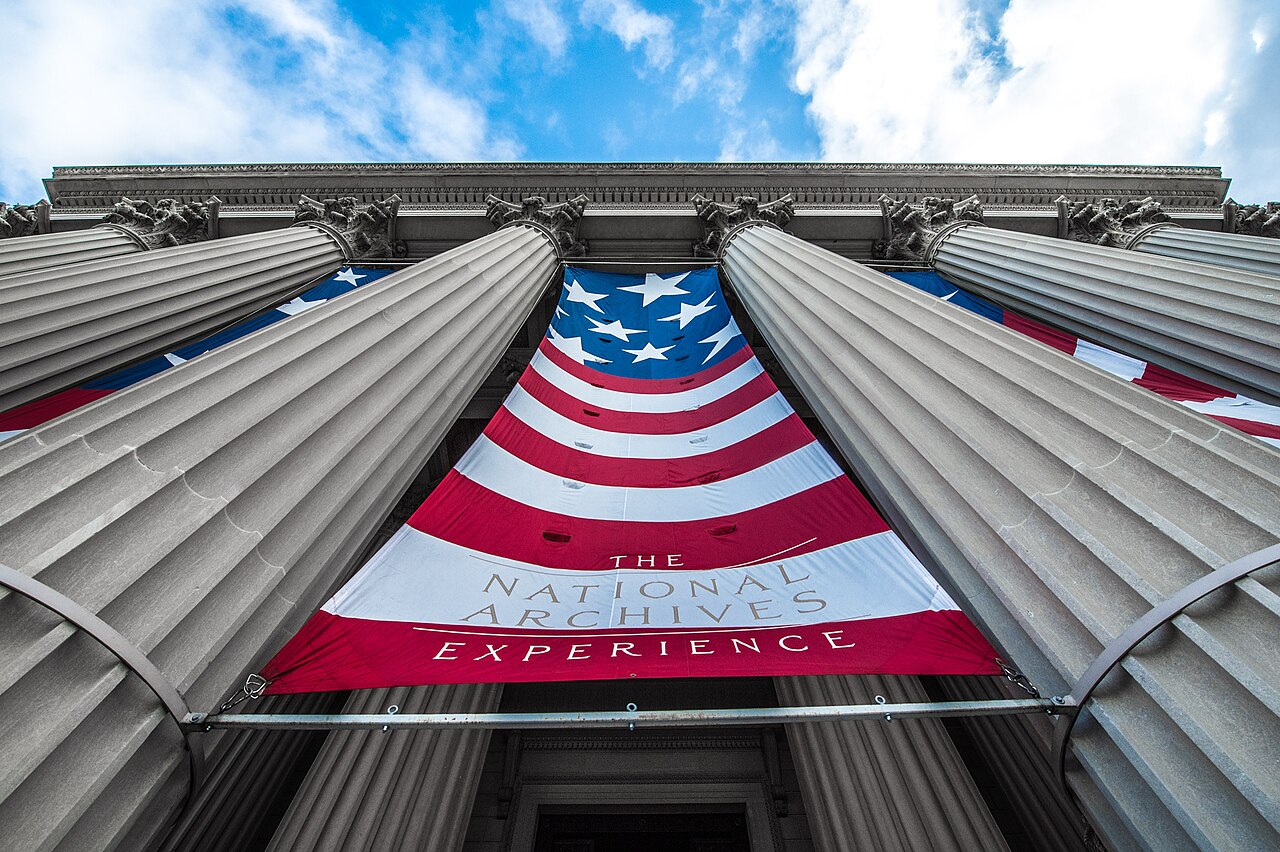
Le Record Group 615 centralise les copies numériques des documents sur les PAN communicables au public, transférées par les agences fédérales en application des sections 1841 à 1843 de la loi d’autorisation de la défense nationale pour l’exercice 2024. NARA assure la conservation et l’accès, et non l’enquête sur les cas : l’inclusion établit la provenance gouvernementale et la pertinence au regard de la définition légale, mais pas l’exactitude de chaque observation, interprétation ou allégation consignée.
Mission et mandat
- Recevoir les copies numériques des documents sur les PAN identifiés et préparés par les agences fédérales en application de la loi de 2024.
- Conserver les pièces transférées dans un groupe d’archives dédié et les rendre accessibles à la recherche publique.
- Fournir des descriptions catalographiques, un accès numérique lorsqu’il existe et des guides reliant la nouvelle collection aux anciens fonds sur les ovnis et les PAN.
- Maintenir une voie archivistique centrale pour des documents créés par des agences aux responsabilités opérationnelles différentes.
Méthodes et résultats
Méthodes
- Transfert légal et entrée dans les fonds
- Description catalographique et conservation numérique
- Accès public à la recherche et orientation dans les archives
Principaux résultats
- Séries du catalogue Record Group 615
- Documents fédéraux numérisés sur les PAN
- Guides de recherche sur les anciens fonds consacrés aux ovnis et aux PAN
- Voie de signalement
- N’accepte pas les signalements d’observations
- Disponibilité des données
- Catalogue public ; numérisation et transferts encore incomplets
Historique
-
1934
Création des Archives nationales
Le Congrès a créé les Archives nationales pour conserver les documents fédéraux ayant une valeur durable. L’institution est devenue en 1985 l’agence indépendante National Archives and Records Administration.
-
22 décembre 2023
Création de la collection imposée par la loi
La loi d’autorisation de la défense nationale pour l’exercice 2024 a chargé NARA de créer une collection de documents sur les PAN et a demandé aux agences fédérales d’examiner, d’identifier et d’organiser les documents concernés en vue de leur communication au public et de leur transfert.
-
2024
Création du Record Group 615
NARA a créé le Record Group 615 afin de recevoir les copies numériques des documents couverts par la loi.
-
2025
Publication des directives de transfert aux agences
NARA a publié la note AC 04.2025, qui définit les modalités d’identification, de préparation et de transfert des documents sur les PAN communicables au public.
-
2025–26
Ajout de séries provenant des agences
Le catalogue public s’est enrichi au fil des transferts d’organismes tels que la FAA, la NRC, l’ODNI, le bureau du secrétaire à la Défense, la NSA, le département d’État, le FBI et le département de l’Armée de l’air.
Travaux actuels
Transferts progressifs des agences
NARA continue de recevoir des copies numériques des agences fédérales et d’ajouter les séries correspondantes au Record Group 615. Les Archives n’annoncent pas de calendrier fixe pour chaque transfert.
Catalogue et accès numérique
Les descriptions des séries et les copies numériques disponibles sont reliées au catalogue des Archives nationales. Certains documents peuvent d’abord n’être consultables que sur les postes publics des Archives nationales à College Park.
Orientation des recherches
NARA maintient des guides distincts pour les anciens fonds sur les ovnis et les PAN conservés dans leurs groupes d’archives d’origine, notamment Project Blue Book et les documents antérieurs au RG 615.
Institutions responsables
National Archives and Records Administration
Dépositaire
Reçoit, conserve, décrit et rend accessibles les documents transférés.
Federal agencies
Organismes producteurs et versants
Identifient les documents qu’ils détiennent, les examinent en vue de leur communication au public et transmettent des copies numériques conformément à la loi.
États-Unis Congress
Autorité législative
A créé la collection et défini l’obligation de transfert dans la législation de défense pour l’exercice 2024.
Organisations liées
Évaluation des éléments probants
La contribution de NARA est archivistique et non investigative. Le Record Group 615 offre aux chercheurs une voie commune pour retrouver les documents sur les PAN transférés par différents organismes fédéraux et préserve l’identité de l’agence productrice. Cette chaîne de conservation est importante, car elle distingue les documents gouvernementaux des reproductions ultérieures dont l’exhaustivité ou la provenance peuvent être incertaines.
La collection ne peut pas être considérée comme un relevé achevé de l’activité fédérale. Les transferts dépendent encore des recherches effectuées par les agences, des décisions de communication et des restrictions d’accès, tandis que certains documents plus anciens restent dans leur groupe d’archives d’origine. L’absence d’une pièce peut donc résulter d’un transfert incomplet, de la classification, de l’histoire de sa conservation ou d’une recherche infructueuse, plutôt que de l’absence d’une activité gouvernementale pertinente.
Le statut archivistique authentifie la pièce en tant que document officiel ; il ne vérifie pas chaque témoignage, jugement analytique ou allégation qu’elle contient. La collection est particulièrement utile pour reconstituer les décisions, la correspondance et la chronologie institutionnelle, à condition d’évaluer séparément le contenu factuel de chaque document.
Portée et limites
Ce que les archives permettent d’établir
- Le RG 615 crée une voie de recherche centrale pour des documents qui resteraient autrement dispersés entre plusieurs agences et séries archivistiques.
- La collection améliore la traçabilité en reliant chaque document à l’agence qui le transfère et à son identifiant dans le catalogue des Archives nationales.
- Sa valeur pour la recherche augmentera à mesure que les agences achèveront leurs transferts et que NARA développera l’accès en ligne.
Limites d’interprétation
- La collection reste incomplète pendant la poursuite des transferts ; l’absence d’un document dans le catalogue actuel ne démontre donc pas qu’aucune pièce pertinente n’existe.
- Les copies communicables au public peuvent comporter des passages occultés ou exclure des éléments protégés par les exemptions légales et les règles de classification.
- La conservation archivistique authentifie un document dans une chaîne de gestion gouvernementale ; elle n’authentifie pas chaque affirmation qu’il contient.
Note sur les éléments probants : La conservation archivistique établit la provenance d’un document, et non l’exactitude de chaque observation ou allégation qu’il contient.
Sources
Les sources sont regroupées selon leur provenance afin de distinguer les documents officiels, le propre récit de l’organisation, les publications de recherche et les analyses indépendantes.
Documents officiels4 sources
-
Officiel
NARA — histoire de l’agence
Documente la création des Archives et leur évolution institutionnelle.
-
Officiel
NARA — Record Group 615
Répertorie les séries transférées par les agences et explique le développement progressif de la collection.
-
Officiel
NARA — foire aux questions sur la collection de documents consacrés aux PAN
Explique la portée légale, la procédure de transfert et les modalités d’accès.
-
Officiel
NARA — documents relatifs aux ovnis et aux PAN par groupe d’archives
Relie le RG 615 aux fonds plus anciens conservés dans d’autres groupes d’archives.