UAP research profile
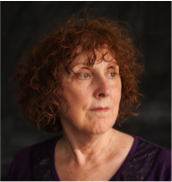
Carol E. Cleland
Philosopher of science, astrobiology researcher and UAPSAC anomaly-identification adviser
- TitlePhilosopher of science, astrobiology researcher and UAPSAC anomaly-identification adviser
Overview
Carol E. Cleland is a Professor of Philosophy at the University of Colorado Boulder whose research concerns philosophy of science, historical and field sciences, astrobiology, the nature of life and the role of anomalies in scientific discovery. She is a SETI Institute affiliate, has worked with NASA Astrobiology Institute science teams and has spent decades examining how researchers can detect phenomena that do not fit established theoretical categories. [S1][S2]
Cleland joined the University of Colorado Boulder in 1986. Her philosophy-of-science work there connects with wider astrobiology research through affiliations including the SETI Institute and the Leverhulme Centre for Life in the Universe. This academic network helps explain her sustained interest in how scientists recognise and investigate anomalies. (University of Colorado Boulder: Cleland profile.)
In June 2026, Cleland was named to the UAP Science Advisory Council (UAPSAC), where "anomaly identification" is listed as her area of expertise. Her University of Colorado faculty profile now explicitly records council membership. [S1][S3]
Cleland's UAP relevance predates the council and follows directly from her philosophy-of-science work. In a 2021 University of Colorado interview, she argued that unexplained UFO/UAP observations should be investigated because a persistent anomaly could indicate instrument problems, unfamiliar natural phenomena or, in principle, extraterrestrial technology. She did not treat those possibilities as equally established. Her emphasis was that high-quality anomalies can be scientifically productive if researchers avoid explaining them away prematurely. [S4] That position is central to her broader work: anomaly is a starting point for investigation, not an explanation.
Academic background
The University of Colorado records that Cleland received her PhD from Brown University in 1981 and joined CU Boulder in 1986 after postdoctoral work at Stanford University's Center for the Study of Language and Information. [S1] Her research spans philosophy of science, logic, metaphysics, historical science, field science, philosophy of biology and astrobiology. She has been a collaborator on NASA Astrobiology Institute projects and is an affiliate of the SETI Institute. [S1][S2]
Her 2019 Cambridge University Press book The Quest for a Universal Theory of Life: Searching for Life As We Don't Know It examines the difficulty of defining life when every confirmed example available to science descends from one terrestrial lineage. [S5] This "N = 1" problem is directly relevant to anomaly science. If researchers build a search method entirely around familiar examples, a genuinely different phenomenon may be classified as noise because it does not fit the expected template.
Historical science and scientific method
Cleland has long argued that not all sciences work primarily through controlled laboratory experiments. Historical sciences such as geology, evolutionary biology, planetary science and parts of astronomy often investigate events that cannot be rerun. Researchers instead assemble multiple traces, compare competing hypotheses and seek explanatory convergence. This matters to UAP.
Many UAP events are transient. Once an incident is over, researchers may have only sensor records, witness accounts, environmental data and institutional documentation. That does not make rigorous inference impossible, but it changes the type of evidence required. Cleland's philosophy provides a framework for evaluating such cases without pretending they are laboratory experiments. The weakness of UAP research arises when the traces are too sparse to discriminate among hypotheses.
Anomalies in scientific discovery
Cleland's current University of Colorado profile states that her research includes how scientists from different disciplines recognise, explore and resolve anomalies. [S1] Her work emphasises that important discoveries can begin as observations that do not fit established expectations. The history of science provides many examples in which an initially awkward data point later becomes important. But there is an essential asymmetry that popular UAP discussion often omits.
Most anomalies do not become scientific revolutions. Many disappear through calibration, improved measurement, revised data processing or conventional explanation. The scientific value of an anomaly therefore depends on whether it persists under stronger observation. Cleland's framework supports investigation; it does not license automatic escalation from "unexplained" to "new physics".
Searching for life without a definition
In her 2019 astrobiology work, Cleland argues that searching only for life that fits a fixed definition risks missing forms that differ materially from terrestrial examples. [S5][S6] Her alternative is to seek potentially biological anomalies: observations that are difficult to explain within a well-characterised abiotic background and then investigate them with multiple independent lines of evidence. This concept maps naturally onto UAP research. A scientifically interesting UAP is not merely an object that an observer cannot name.
The strongest candidate is one that remains anomalous after the background environment, sensor system and conventional object classes are well characterised. This is an important distinction between ordinary unidentified status and scientific anomaly.
Shadow biosphere and unfamiliar life
Cleland also developed the "shadow biosphere" hypothesis: the possibility that Earth itself could contain forms of life sufficiently different from known biology that conventional detection methods might overlook them. [S1][S5] The hypothesis is not evidence that such a biosphere exists. Its scientific importance is methodological. A search strategy can fail if it builds the target definition from a single familiar example.
This is relevant to UAP only by analogy. Researchers should not assume in advance what an unfamiliar technological or natural phenomenon must look like. At the same time, an open search space cannot become unlimited. Without discriminating criteria, every anomaly can be made compatible with an unconstrained hypothesis.
2021 UAP comments
In June 2021, shortly before release of the ODNI Preliminary Assessment, CU Boulder interviewed Cleland about UFOs and anomalies. [S4] She outlined several broad possibilities for a persistent unexplained observation. It could reflect:
- an instrument or data problem;
- a natural phenomenon not yet understood;
- or, at the most speculative end, extraterrestrial technology. Her central point was that each outcome would be scientifically important.
An instrument problem matters because military and scientific systems depend on reliable sensors. An unknown natural phenomenon could produce new physics or atmospheric science. An extraterrestrial technology would obviously be transformative. This is a much more disciplined framework than assuming that the last option becomes correct whenever the first two have not yet been established.
The Condon legacy at CU Boulder
Cleland's UAP interest is historically notable because the University of Colorado was also home to the Air Force-sponsored Condon study of the 1960s. [S7] The Condon Report concluded that further extensive UFO study was unlikely to advance science. Cleland has argued from a different philosophy-of-science perspective: genuine anomalies can be worth investigating because the unexpected sometimes reveals flaws in theory or instrumentation. [S4] This does not mean she has demonstrated that Condon's overall conclusion was wrong in every case.
It shows a methodological disagreement about when unresolved evidence warrants continued attention. This creates a historical connection between Condon, McDonald, Sturrock and modern anomaly science.
UAP Science Advisory Council
Cleland was included in the initial public UAPSAC roster with anomaly identification as her assigned role. [S3][S8] DefenseScoop independently reported the council's relationship to the ODNI-supported UAP Governance Board. [S8] Her inclusion makes methodological sense. Before an advisory council asks "what is this?", it needs a criterion for deciding whether an observation is actually anomalous.
That criterion should distinguish:
- not yet identified;
- inadequately measured;
- inconsistent with one model;
- persistent across multiple independent measurements;
- inconsistent with well-characterised known phenomena. Without such distinctions, an archive can inflate every incomplete case into an anomaly.
2026 biological-anomaly work
Cleland's anomaly research has continued independently of UAP. In July 2026, Cambridge University Press published a chapter by Cleland and Michael Wong titled "Searching for Potentially Biological Anomalies: An Alternative Tool to Contemporary Biosignature Approaches." [S9] The chapter argues that even modern biosignature strategies can carry hidden assumptions about how life should manifest and that scientists should remain alert to observations that violate those expectations. This work is highly relevant to her council role because it demonstrates that "anomaly identification" is not a label created for UAPSAC. It is part of an established research programme in astrobiology and philosophy of science.
The danger of anomaly inflation
Cleland's work can be misused if "anomaly" becomes synonymous with "mystery." A data point is scientifically anomalous only relative to a well-developed background of expectations. If the instrument is poorly calibrated, the range unknown and environmental context missing, researchers may not know enough to establish that the observation violates a model. It may simply be underdetermined.
This distinction is especially important in UAP data. Many AARO cases remain unresolved because information is insufficient. Insufficient-data cases should not automatically enter the same category as well-characterised observations that conflict with known physics or known object classes.
The danger of premature dismissal
The opposite error also exists. If every anomalous observation is forced into a familiar category because prevailing theory must be correct, science can miss genuine discoveries. Cleland's philosophy is strongest here. Researchers should generate and compare competing explanations and pursue additional evidence capable of differentiating them.
For UAP, that means:
- better range data;
- multisensor observations;
- calibration;
- environmental context;
- reproducible collection;
- transparent uncertainty. Anomaly is not a conclusion. It is a reason to design the next measurement.
Evidence analysis
Cleland's inclusion has a stronger methodological foundation than most UAPSAC profiles. Her work on anomalies, astrobiology and unfamiliar life predates the modern council by many years. The council appointment therefore maps onto an existing area of scholarship rather than creating a new UAP identity. The main limitation is disciplinary scope.
Philosophy of science can improve reasoning about evidence and anomalies. It cannot determine from first principles whether a specific infrared target is a bird, missile or unknown craft. That requires domain-specific sensor and physical analysis. Her strongest contribution is defining what kind of evidence would justify calling something genuinely anomalous.
What is established
- Cleland is a Professor of Philosophy at CU Boulder with a long research record in philosophy of science and astrobiology. [S1]
- She is affiliated with the SETI Institute and has worked with NASA astrobiology science teams. [S1][S2]
- Her scholarship explicitly addresses scientific anomalies and unfamiliar forms of life. [S1][S5][S6]
- She publicly argued in 2021 that persistent UFO/UAP anomalies deserve scientific investigation while listing multiple possible explanations. [S4]
- She is a UAPSAC member assigned to anomaly identification. [S1][S3][S8]
- Her 2026 work with Michael Wong applies anomaly-based reasoning to the search for unfamiliar life. [S9]
- Her mainstream anomaly research clearly predates UAPSAC. [S1][S6]
What is not established
- Cleland's anomaly framework does not establish that any particular UAP represents new physics.
- Scientific interest in UFO/UAP does not equal endorsement of an extraterrestrial explanation.
Overall assessment
Carol Cleland is one of the most intellectually relevant UAPSAC additions because her assigned task—anomaly identification—is already a major part of her established academic research. Her work provides a useful correction to two common UAP errors. The first is premature dismissal: an observation that conflicts with expectations can be scientifically important and should not be ignored simply because it is inconvenient. The second is anomaly inflation: unexplained status is not evidence of a revolutionary phenomenon unless the observation is sufficiently well characterised to show that prevailing explanations genuinely fail.
That distinction is fundamental. A weak video with missing range may be unresolved because the data are inadequate. A calibrated multisensor event that repeatedly violates well-tested physical expectations would be a much stronger scientific anomaly. Cleland's astrobiology work also reinforces an important search principle: scientists should avoid defining the unknown so narrowly that unfamiliar phenomena become invisible to the detection strategy.
But openness must be paired with discriminating evidence. Cleland's work provides a methodological framework for assessing anomalies across different fields. Her significance is not that she supplies an answer to what UAP are. It is that she helps define the evidential conditions under which an unusual observation should become a serious scientific problem.
Confidence by proposition
| Proposition | Confidence | Basis |
|---|---|---|
| Cleland is an established philosopher of science and astrobiology researcher | High | CU Boulder and SETI records |
| Scientific anomalies are a central part of her research programme | High | Faculty profile/publications |
| She publicly supported serious investigation of UAP anomalies before joining UAPSAC | High | 2021 CU interview |
| She is a UAPSAC member focused on anomaly identification | High | CU profile and council reporting |
| Her work establishes extraterrestrial technology in UAP cases | Low | She explicitly presents multiple possibilities |
| An insufficient-data case qualifies automatically as a scientific anomaly | Low | Contradicts the logic of her framework |
| Her anomaly expertise can materially improve UAP classification standards | High | Strong direct methodological fit |
| Philosophy alone can resolve individual sensor cases | Low | Requires physical/instrument evidence |
Sources
[S1] Primary institutional source — University of Colorado Boulder, Department of Philosophy. Carol Cleland faculty profile. https://www.colorado.edu/philosophy/people/faculty/carol-cleland
[S2] Primary institutional source — SETI Institute. Carol E. Cleland affiliate profile. https://www.seti.org/people/carol-e-cleland/
[S3] Primary council-roster source — Disclosure Foundation. UAP Science Advisory Council. https://disclosure.org/news/uap-science-advisory-council
[S4] Primary institutional interview — CU Boulder Today. "How studying UFOs could lead to new scientific breakthroughs," 8 June 2021. https://www.colorado.edu/today/2021/06/08/how-studying-ufos-could-lead-new-scientific-breakthroughs
[S5] Scholarly book — Carol E. Cleland. The Quest for a Universal Theory of Life: Searching for Life As We Don't Know It, Cambridge University Press, 2019. https://www.cambridge.org/core/books/quest-for-a-universal-theory-of-life/D28E15D2B316E60B802112B6DB28526B
[S6] Peer-reviewed astrobiology — Carol E. Cleland. "Moving Beyond Definitions in the Search for Extraterrestrial Life," Astrobiology (2019). https://journals.sagepub.com/doi/abs/10.1089/ast.2018.1980
[S7] Primary institutional historical context — University of Colorado Boulder. "The Condon Report: CU Boulder's Historic UFO Study," 2021. https://www.colorado.edu/coloradan/2021/11/05/condon-report-cu-boulders-historic-ufo-study
[S8] Independent government-sourced reporting — DefenseScoop. UAPSAC/Governance Board, 17 June 2026. https://defensescoop.com/2026/06/17/new-science-advisory-council-forms-to-help-us-government-resolve-the-uap-mystery/
[S9] Scholarly book chapter — Carol E. Cleland and Michael L. Wong. "Searching for Potentially Biological Anomalies," in Astronomy and Philosophy, Cambridge University Press, online 17 July 2026. https://www.cambridge.org/core/books/abs/astronomy-and-philosophy/searching-for-potentially-biological-anomalies/54A7D5F8689EA61B6AB76ECB1AC91977