Reported morphology
Boomerang / chevron
Swept, crescent, V-shaped or chevron forms, including formations perceived as one object.
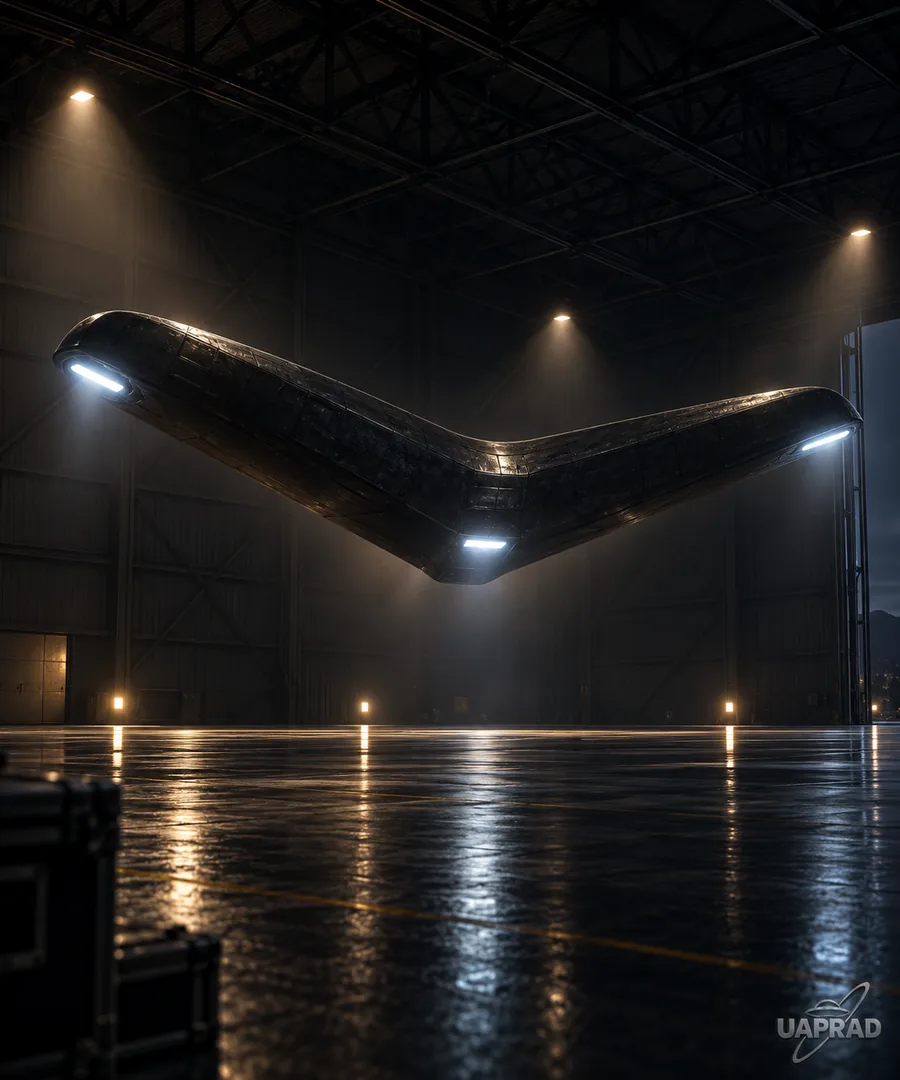
Overview
Boomerang and chevron descriptions overlap with triangles but retain an open or swept profile. The form appears in both historically influential individual reports and large night-time sightings.
Observation and identification
A line or V of lights may be a single body, a formation or unrelated lights aligned by perspective. The record should distinguish silhouette, light arrangement and inferred outline.
The earliest wording, sketches and recordings carry greater evidential weight than later labels or illustrations.
Notable cases
The reported form is material to these cases; the links do not imply a common object or cause.
Public record
These pages document the institutional and historical record associated with the reports.
Key witnesses
Each dossier separates direct observation from later recollection and interpretation.
Evidence assessment
The category connects influential reports, but their geometries are not interchangeable. Kenneth Arnold’s descriptions, the earlier Phoenix formation and Hudson Valley observations must each be read in their own chronology rather than reduced to a single V-shaped craft narrative.
Source library
Sources are grouped by evidential role. A tier records provenance and directness; it does not determine whether a reported interpretation is correct.
Tier 1 Primary records and testimony
- Kenneth Arnold’s written report and drawing — Arnold’s own report and drawing allow the later “saucer” shorthand to be compared with his recorded descriptions.
- Kenneth Arnold radio interview, 26 June 1947 — The interview records Arnold’s early shape and motion language before decades of later retelling.
Tier 3 Technical and critical analysis
- Smithsonian: 1947, the year of the flying saucer — A concise account of how Arnold’s observation entered public culture and shaped later terminology.