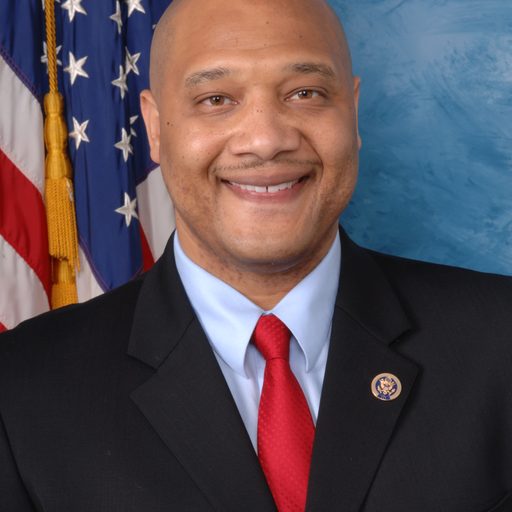
UAP research profile
André Carson
U.S. Representative | Congressional oversight | Intelligence and aviation policy
- TitleU.S. Representative
- Professional domainPolitics / Government
- UAP roleLegislator · Congressional Oversight
- NationalityUnited States
- Active period2021–present
- OrganisationU.S. House of Representatives · House Permanent Select Committee on Intelligence
U.S. Representative who chaired the May 2022 House Intelligence UAP hearing, the first public congressional UFO hearing in over fifty years.
Biography
André Carson has represented Indiana's 7th Congressional District since 2008. Before entering Congress he worked in law enforcement and in counterterrorism-related roles in Indiana. His relevance to UAPRAD comes less from his general political biography than from his later work on intelligence oversight and, more recently, aviation policy.
Carson’s work connects his Indiana constituency with intelligence oversight in Washington, D.C. He chaired the public session on UAP in the Capitol’s hearing rooms on 17 May 2022, bringing Pentagon reporting methods and aviation observations into an open congressional record. (House Intelligence: 17 May 2022 hearing record.)
Carson served on the House Permanent Select Committee on Intelligence and chaired the subcommittee that held the 17 May 2022 public hearing on unidentified aerial phenomena. He later became Ranking Member of the House Aviation Subcommittee, giving him an additional institutional connection to airspace safety and the National Airspace System.
Role in the UAP Topic
Carson chaired the House Intelligence Counterterrorism, Counterintelligence, and Counterproliferation Subcommittee's open UAP hearing on 17 May 2022. Ronald Moultrie, the Pentagon's senior intelligence official, and Scott Bray, the deputy director of naval intelligence, testified. The hearing brought military reporting and the implementation of a dedicated investigative programme into public congressional oversight.
Credentials
- Congressional serviceVerified
Carson has served in the House since 2008.
- Intelligence oversightVerified
His service on the House Intelligence Committee placed him in a legitimate oversight role concerning intelligence collection, classification and national-security reporting.
- Chair of the 2022 public UAP hearingVerified
The official House record identifies Carson as chairman of the subcommittee that held the hearing.
- Aviation oversightVerified
His later Aviation Subcommittee role is relevant to airspace safety but should not be back-projected as the reason for his earlier UAP involvement.
These credentials establish institutional authority. They do not establish that Carson has personal knowledge of every classified UAP allegation or that any particular explanation of UAP is correct.
Claims and Evidence
National security and aviation safety
Carson’s argument at the 17 May 2022 hearing begins with an operational responsibility: investigate unidentified activity that may endanger aircraft or compromise military operations. ODNI’s June 2021 assessment gives that concern a concrete basis. Its 144 government reports included 80 with multiple-sensor observations and 11 reports documenting pilots’ accounts of near misses. These are reporting figures, and the near-miss accounts supply a reason to examine collision hazards. ODNI, 2021, pp. 4 and 6.
Safety investigation and counterintelligence ask different questions. Reconstructing a near miss requires positions, timing and the circumstances of the encounter. Assessing surveillance additionally requires evidence about the object’s origin and activity. Treating every unresolved observation as the same kind of threat would obscure those requirements. Carson’s position is persuasive as a demand for organised investigation because it concerns risks that agencies already have a duty to assess. The justification arises from the reported encounters and their operational setting. Hearing transcript, pp. 2–3.
Reporting stigma and the collection process
Carson asked that personnel be treated as “witnesses, not as kooks”. ODNI had identified disparagement among aviators and analysts as a reporting obstacle, alongside inconsistent procedures. The Navy introduced its standard reporting mechanism in March 2019; the Air Force adopted it in November 2020. A reporting system therefore had two connected problems to address: reluctance to submit observations and practical arrangements for capturing them. Hearing transcript, p. 3; ODNI, 2021, p. 4.
The 2022 annual report, published in January 2023, shows the collection process changing. The catalogue reached 510 reports by 30 August 2022: the earlier 144, another 247 new reports and 119 accounts of earlier events received or discovered later. ODNI and AARO attributed increased reporting partly to reduced stigma and greater awareness of possible risks. The recovery of older accounts is particularly informative: some growth came from bringing past observations into the record. This supports Carson’s concern about access to evidence and explains why report volume must be interpreted through the reporting process. ODNI/AARO, 2022 annual report, pp. 2 and 5.
Investigation of difficult cases
Carson challenged officials to demonstrate that they were examining difficult observations rather than concentrating on “low-hanging fruit with easy explanations”. Moultrie answered with a commitment to a standardised process and consideration of all hypotheses. The exchange establishes an oversight question about investigative practice. It leaves the programme’s performance to be judged against its subsequent work. Hearing transcript, pp. 19–20.
ODNI had identified 18 incidents, represented in 21 reports, with apparently unusual movement or flight characteristics and called for technical review. That category provides a practical way to develop Carson’s question: examine whether the measurements support the reported motion, and compare explanations using the same observation geometry. An apparent rapid movement, for example, requires a range estimate before it can yield a speed. Cases with suitable measurements can support discriminating tests; poorly documented cases first require better collection. Investigative priority should reflect the consequence of the event and the prospect of resolving a meaningful discrepancy. ODNI, 2021, pp. 4–5.
Turning an organisational commitment into accountable work
Carson also pressed the Pentagon on the implementation of the Airborne Object Identification and Management Synchronization Group, or AOIMSG. His opening statement raised the approaching deadline and the absence of a named director. Moultrie replied that a director had been selected that week, office space identified and coordination begun across the defence and intelligence communities. His answer identified specific staffing and coordination milestones against which Congress could assess the programme’s implementation. Hearing transcript, pp. 3 and 19–20.
Selecting a director and identifying office space are organisational milestones. The operational test is whether the programme can obtain relevant records, apply consistent analysis and return findings to personnel and Congress. Carson’s contribution here was to bring an administrative commitment into a public oversight exchange. Recording the question, the officials’ answer and the later reporting process gives readers a basis for assessing delivery over time.
References
- House Intelligence Subcommittee, UAP hearing transcript, 17 May 2022Opening remarks and oversight exchange, pp. 2–3 and 19–20.
- U.S. House Committee Repository, Unidentified Aerial Phenomena, 17 May 2022
- House Intelligence Committee Democrats, Chairman Carson Opening Statement, 17 May 2022
- ODNI, Preliminary Assessment: Unidentified Aerial Phenomena, 25 June 2021
- ODNI/AARO, 2022 Annual Report on Unidentified Aerial Phenomena
- Biographical Directory of the United States Congress, André Carson