UAP research profile
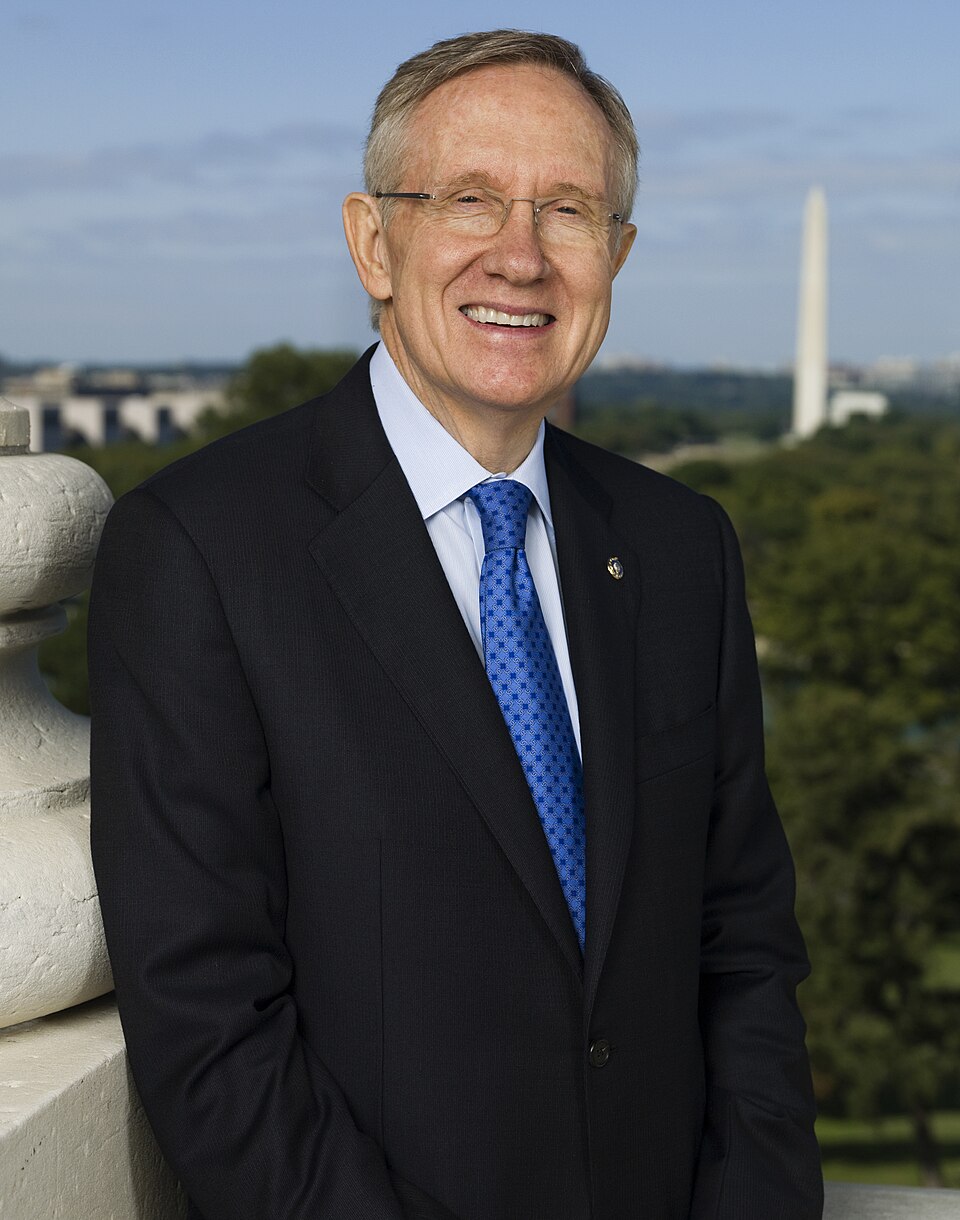
Harry Reid
Former U.S. Senate Majority Leader and sponsor of AAWSAP funding
- TitleFormer U.S. Senate Majority Leader and sponsor of AAWSAP funding
Overview
Harry Mason Reid (1939–2021) was a U.S. Senator from Nevada from 1987 to 2017 and served as Democratic leader in the Senate from 2005 until his retirement, including eight years as Senate Majority Leader. Within the modern UAP record, his importance derives from his role in securing funding for the Defense Intelligence Agency programme formally known as the Advanced Aerospace Weapon System Applications Program (AAWSAP), his subsequent attempt to obtain more restrictive security protection for parts of that work, and his long-term advocacy for continued investigation of unexplained aerospace reports. [S1][S2][S3]
Reid’s UAP-related work connected his Nevada Senate representation with defence appropriations and policy in Washington, D.C. His June 2009 request for tighter security around AAWSAP formed part of that federal correspondence, while the contractor work associated with the programme was conducted through Bigelow’s Nevada organisation. (DIA: Reid letter, June 2009.)
Reid is frequently described simply as the senator who funded a "Pentagon UFO programme". That shorthand captures part of the history but obscures significant details. The formal DIA programme had a broader advanced-aerospace threat remit; UAP/UFO investigations were nevertheless conducted within the contractor effort with the support of the DIA programme manager. The relationship between the formal AAWSAP contract, the label AATIP and later informal UAP activity has been a continuing source of confusion and dispute.
Political background
Reid represented Nevada in the U.S. Senate from 1987 to 2017. He became Senate Democratic leader in 2005, served as Majority Leader from 2007 to 2015 and then as Minority Leader until leaving the Senate in 2017. [S1]
His seniority is important to understanding the UAP history because the programme associated with him was not the result of a public campaign. It emerged through defence appropriations and DIA contracting, with Senators Daniel Inouye and Ted Stevens also associated with the broader political support surrounding the effort. [S2]
Reid later discussed UAP openly and continued to argue that reports deserved serious investigation. His influence on later congressional attention is explicit: Chuck Schumer cited Reid as his mentor and said the 2023 UAP Disclosure Act carried forward Reid's transparency legacy. [S4]
Origins of AAWSAP
DIA records released through the Freedom of Information Act provide the strongest documentary basis for Reid's role. Agency briefing material states that Reid met with a DIA analyst in early 2008 and that Reid and Senator Daniel Inouye subsequently co-sponsored a $10 million FY2009 appropriation to assess long-term or "over-the-horizon" foreign aerospace threats. A further $12 million followed for FY2010, bringing the documented programme funding to approximately $22 million. [S2]
In September 2008, DIA awarded the associated contract to Bigelow Aerospace Advanced Space Studies (BAASS). DIA's released records describe BAASS as the sole bidder. [S2]
The formal statement of work focused on future aerospace technologies and a series of advanced technical areas. AARO's 2024 Historical Record Report similarly describes the programme's primary purpose as investigating next-generation aerospace technology in twelve areas. [S5]
This formal remit is one reason the programme cannot accurately be reduced to a conventional UFO-investigation office. However, the other half of the record is equally important: AARO reports that the selected contractor conducted UFO/UAP-related research with support from the DIA programme manager, including case review, investigation activity and work drawing on older U.S. government UFO records. [S5] The most defensible description is therefore that AAWSAP was a DIA advanced-aerospace programme within which substantial UFO/UAP-related work was undertaken, rather than either extreme claim that it was purely a UFO programme or that UAP work was irrelevant to it.
AAWSAP and AATIP: the naming problem
Public discussion frequently uses "AATIP"—Advanced Aerospace Threat Identification Program—for the Reid-associated effort. The documentary record is more complicated.
DIA's released files include records using AATIP terminology, including material associated with Reid's security request. AARO's later historical review states that AAWSAP was the formal programme name and that AATIP was not a separate official Department of Defense programme in the way it was often described publicly. AARO says the AATIP label was later used by an informal UAP community of interest after AAWSAP ended. [S2][S5]
This distinction matters because later narratives sometimes merge the funded DIA contract, internal or informal activity, and post-programme UAP work into one continuous organisation. The evidence supports continuity of people and interest, but not necessarily a single formally authorised programme operating unchanged under one name. AAWSAP refers here to the funded DIA contract; sources that use AATIP retain their own terminology. The naming ambiguity remains unresolved.
Reid's 2009 Special Access Program request
One of the most important primary documents is Reid's 24 June 2009 letter requesting that portions of the programme receive Restricted Special Access Program status. In the letter, Reid referred to highly sensitive, unconventional aerospace-related findings and described potential work touching areas such as advanced lift, propulsion, materials, controls and signature reduction. [S3]
The letter establishes that Reid regarded at least parts of the effort as sufficiently sensitive to seek heightened protection. It also records the categories of technology that he believed warranted such treatment.
What the letter does not establish is equally important. A request for SAP status is not evidence that a SAP was approved, nor does Reid's description itself independently prove that the programme had discovered operational extraordinary technology.
DIA records and AARO's later review state that the request was rejected because the Department did not consider the additional protection justified. A later DIA memorandum records that insufficient grounds existed to establish the requested security structure and that senior officials discussed the issue with Reid. [S5][S6] The rejected request is therefore significant evidence of Reid's expectations and concern, but it should not be used as evidence that the Department created a hidden SAP around recovered anomalous technology.
Programme outputs and termination
AAWSAP generated a set of Defense Intelligence Reference Documents addressing advanced aerospace concepts. These covered topics including propulsion, materials, energy and theoretical technologies. DIA's FOIA reading room now hosts many of these records. [S2]
AARO's 2024 historical review states that the programme was terminated after the funded deliverables were completed, citing DIA and Department of Defense concerns about the value of the work for the agency's mission. [S5] AARO's retrospective account should be treated as an official institutional assessment rather than as the only possible interpretation of the programme. It was written years after the programme and has itself been disputed by some former participants. The strongest historical method is therefore to distinguish contemporary DIA records from later recollections and from AARO's 2024 synthesis.
The Bigelow relationship and procurement context
Reid had a longstanding relationship with Nevada businessman Robert Bigelow, whose BAASS organisation received the DIA contract. Contemporary reporting also documented political contributions associated with Bigelow. [S7]
This relationship is relevant to governance and should not be omitted. The fact that BAASS was the sole bidder and that Bigelow was personally known to Reid creates a legitimate reason to document how the contract arose and how it was awarded.
However, those facts do not by themselves establish improper procurement or corruption. The public records cited here establish the relationship, the sole-bid outcome and the programme award; they do not demonstrate that Reid personally manipulated the contracting process unlawfully. The relationship raises questions about appearances, without establishing unlawful conduct.
Later advocacy and legacy
After leaving office, Reid continued to argue publicly that UAP reports warranted investigation and greater transparency. His position became part of the political genealogy of the post-2017 UAP issue. [S8]
The most direct evidence of his continuing influence came after his death. In 2023, Schumer publicly invoked Reid's legacy when introducing the UAP Disclosure Act, linking the new records-and-transparency framework to Reid's earlier efforts. [S4]
This connection demonstrates that Reid's importance was not confined to the relatively small AAWSAP programme. His willingness, as a senior Senate leader, to treat the subject as a legitimate national-security and oversight question helped create political space for later senators to do the same.
Evidence analysis
The strongest evidence surrounding Reid is documentary and administrative. Senate career records establish his institutional authority. DIA files establish the appropriations history, the BAASS contract, the programme terminology and the later security request. Reid's 2009 letter establishes his own contemporary view of the programme's sensitivity. AARO's Historical Record Report provides a later Department of Defense interpretation of the programme's remit and termination.
The more difficult questions concern scope and inference. First, the formal AAWSAP statement of work focused on advanced aerospace threats and technologies, but UFO/UAP research occurred within the contracted activity. Treating either fact as cancelling the other produces a distorted account.
Second, Reid's request for SAP status is evidence that he believed sensitive findings deserved additional protection. It is not independent confirmation that the findings represented non-human or otherwise extraordinary technology.
Third, the programme's association with Robert Bigelow is an appropriate subject for governance scrutiny. Yet the evidential threshold for documenting a relationship is much lower than the threshold for alleging wrongdoing. No such finding should be implied without evidence.
Finally, Reid's later advocacy is relevant to his historical influence but should be separated from contemporaneous programme documentation. Statements made years after AAWSAP began cannot substitute for records created while the programme was operating.
What is established
- Reid served in the U.S. Senate from 1987 to 2017 and held the position of Senate Majority Leader. [S1]
- He played a central role in securing approximately $22 million in appropriations associated with the DIA programme formally known as AAWSAP. [S2][S5]
- BAASS received the DIA contract and was recorded as the sole bidder. [S2]
- UFO/UAP-related investigative work occurred within the contractor effort even though the formal statement of work was framed around broader advanced aerospace threats. [S5]
- Reid requested Restricted SAP protection for parts of the effort in June 2009. [S3]
- The Department did not approve the requested special-access structure. [S5][S6]
- Later UAP transparency legislation explicitly invoked Reid's political legacy. [S4]
What is not established
- The AAWSAP/AATIP documentary record does not establish that the programme obtained or confirmed non-human technology.
- Reid's SAP request does not establish that a secret SAP was created.
Overall assessment
Harry Reid is one of the most consequential political figures in the modern UAP history because he helped convert an unconventional subject into funded defence-intelligence activity. The documentary record strongly supports his role in obtaining resources for AAWSAP and later seeking tighter security around aspects of the work. It also shows that the programme's formal remit and its actual UFO/UAP-related activities were not identical, which is why simple descriptions of AAWSAP as either "the Pentagon UFO programme" or "not a UFO programme" are inadequate.
The evidence does not support using Reid's involvement as proof that the U.S. government confirmed extraordinary technology. His 2009 letter records a senator seeking additional protection for work he considered sensitive; the request was rejected. That sequence is historically important precisely because both parts of it are documented.
Reid's longer-term significance is political. His seniority helped make UAP investigation administratively possible at a time when the subject carried substantial institutional stigma. The later Schumer–Rounds disclosure legislation explicitly positioned itself within that legacy. Reid's actions materially shaped the government structures through which UAP re-entered formal U.S. defence and congressional attention. His personal beliefs do not resolve the nature of UAP.
Confidence by proposition
| Proposition | Confidence | Basis |
|---|---|---|
| Reid was central to obtaining AAWSAP funding | High | DIA and DoD records |
| Approximately $22 million was appropriated for the effort | High | DIA/AARO records |
| BAASS was the sole bidder for the contract | High | DIA documentation |
| UAP/UFO-related work occurred within the contractor programme | High | DoD historical review and released programme record |
| The formal AAWSAP statement of work was broader than UFO investigation | High | Contract/programme documentation |
| Reid obtained an approved Restricted SAP for the programme | Low | The documented request was not approved |
| Reid's 2009 wording proves extraordinary technology had been discovered | Low | The letter records his assessment/request, not independent verification |
| Publicly available evidence establishes procurement impropriety | Low | Relationship and sole-bid facts exist, but wrongdoing is not established |
Sources
[S1] Primary — U.S. Senate Historical Office / Biographical Directory. Harry Reid congressional biography and leadership service. https://bioguide.congress.gov/search/bio/R000146
[S2] Primary — Defense Intelligence Agency FOIA Electronic Reading Room. AAWSAP/AATIP programme records, contract status material and related Reid documents. https://www.dia.mil/FOIA/FOIA-Electronic-Reading-Room/
[S3] Primary — Defense Intelligence Agency FOIA release. Harry Reid correspondence concerning requested restricted Special Access Program treatment, 24 June 2009. https://www.dia.mil/FOIA/FOIA-Electronic-Reading-Room/
[S4] Primary — U.S. Senate Democratic Caucus. Schumer–Rounds UAP Disclosure Act announcement, 14 July 2023, explicitly invoking Reid's legacy. https://www.democrats.senate.gov/newsroom/press-releases/schumer-rounds-introduce-new-legislation-to-declassify-government-records-related-to-unidentified-anomalous-phenomena-and-ufos_modeled-after-jfk-assassination-records-collection-act--as-an-amendment-to-ndaa
[S5] Primary institutional assessment — AARO. Report on the Historical Record of U.S. Government Involvement with Unidentified Anomalous Phenomena (UAP), Volume I, 2024. https://www.aaro.mil/AARO-Historical-Record-Report/
[S6] Primary — DIA FOIA record. Departmental memorandum concerning the requested security classification/SAP structure and its rejection. Available in DIA's AAWSAP/AATIP reading-room collection. https://www.dia.mil/FOIA/FOIA-Electronic-Reading-Room/
[S7] Contemporary secondary reporting — CNN. Reporting on Reid, Bigelow and the programme following public disclosure in 2017. Use for relationship/procurement context, not as the primary programme record. https://edition.cnn.com/TRANSCRIPTS/1712/19/cnr.02.html
[S8] Secondary/first-person contextual record — CNN and other Reid interviews. Reid's later public advocacy for continued UAP investigation. https://edition.cnn.com/2021/01/13/politics/harry-reid-ufos/index.html