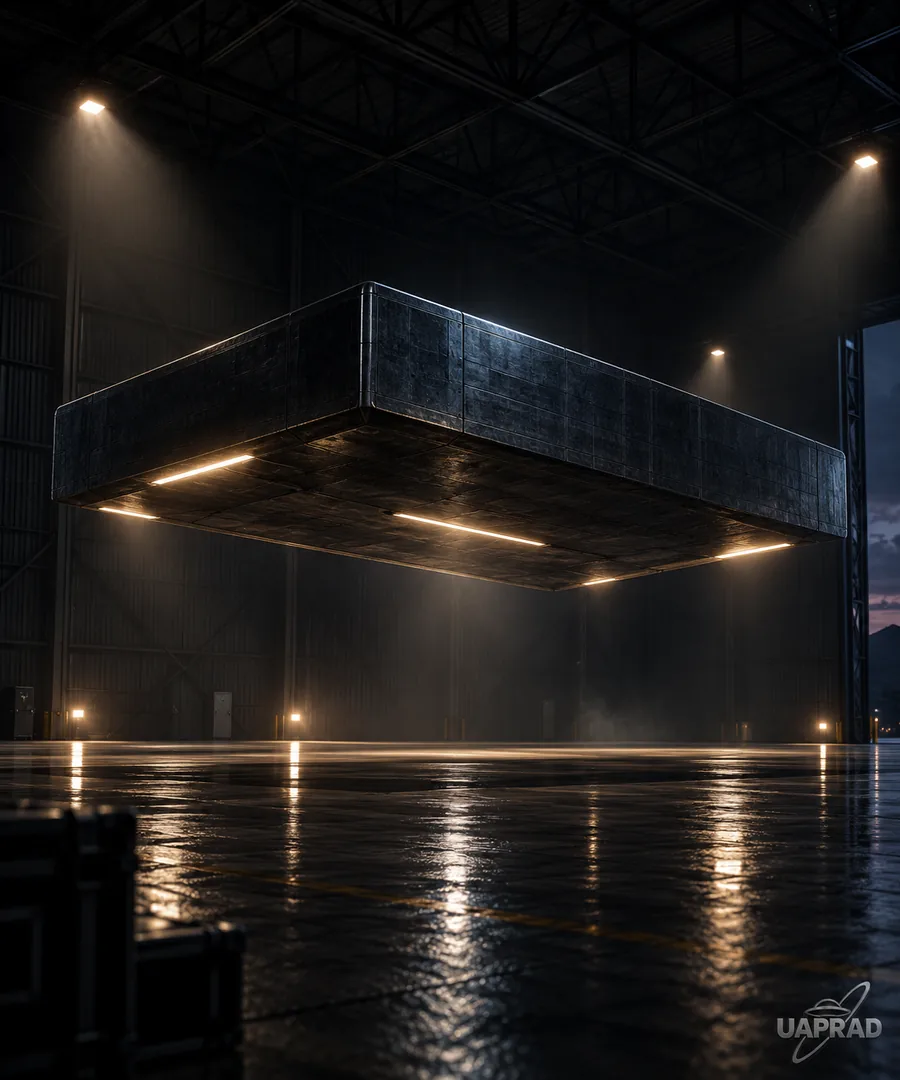
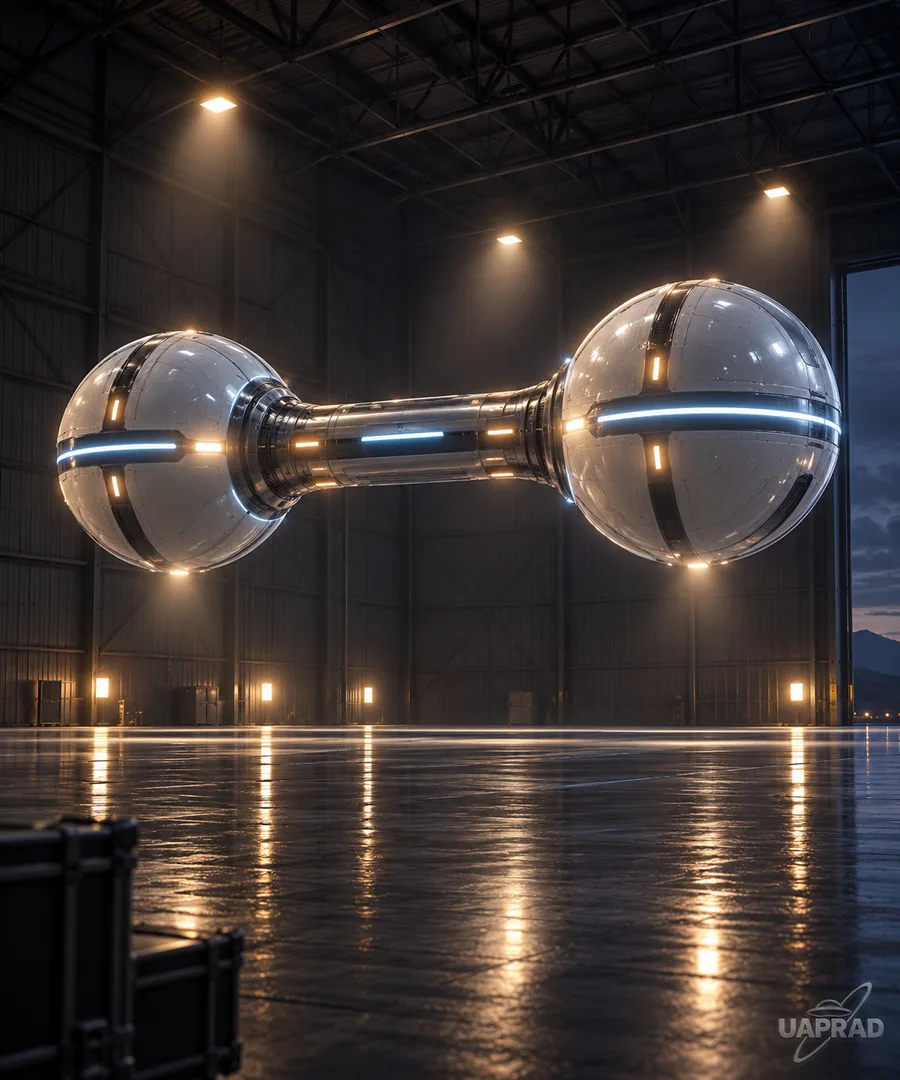
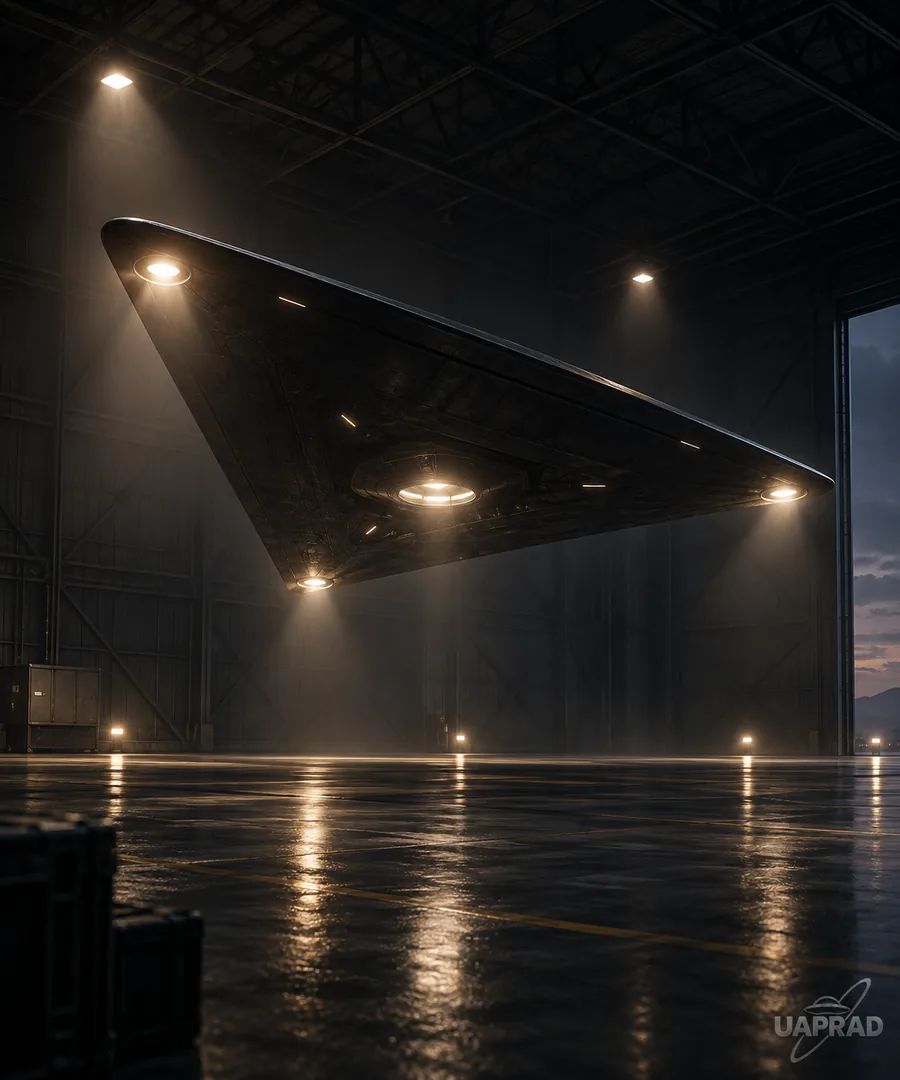
Reported morphology
Cross / cruciform
Cross-shaped silhouettes or arrangements whose arms suggest a cruciform structure.
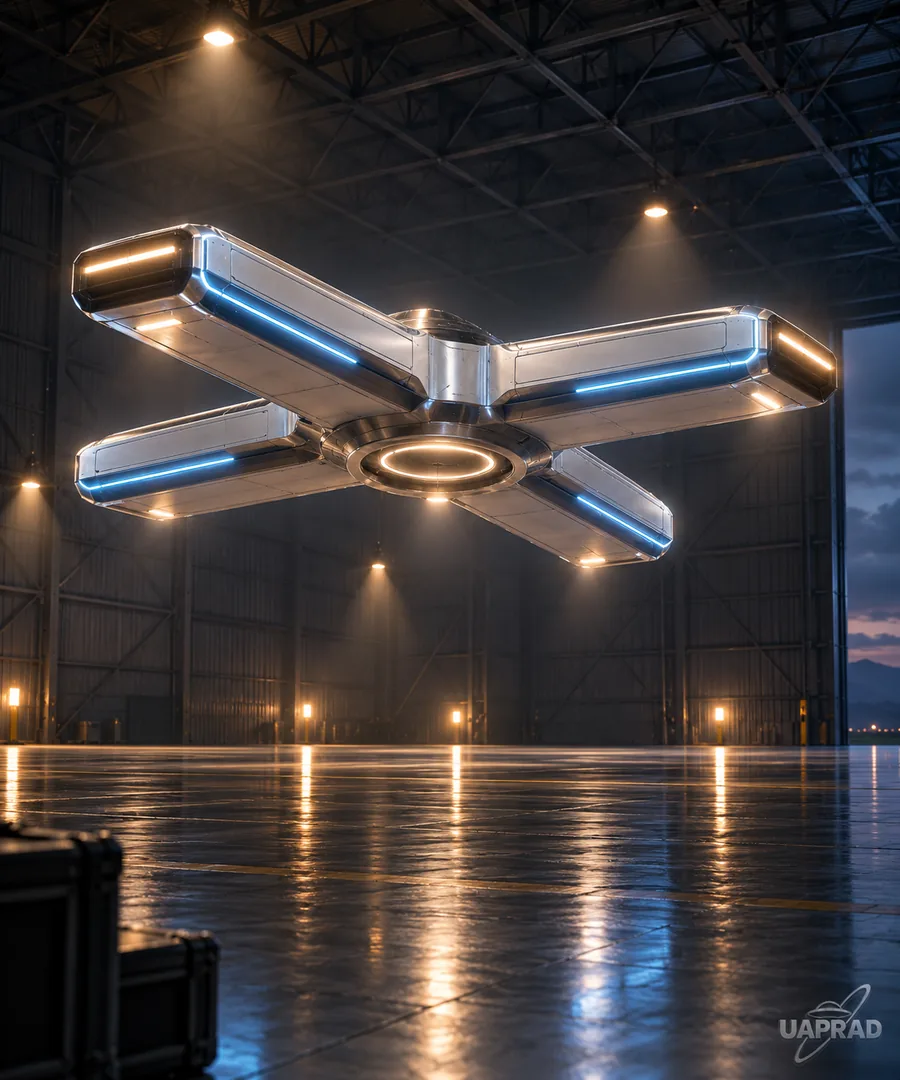
Overview
Cruciform reports are uncommon and particularly vulnerable to aircraft misidentification because a conventional airframe can present a cross-like planform. The present archive does not establish a coherent phenomenon defined by this shape.
Observation and identification
Aircraft recognition, viewing angle and illumination should lead the assessment. A source should enter this category only when the cross form is part of the recorded observation, not a later artist’s reconstruction.
The earliest wording, sketches and recordings carry greater evidential weight than later labels or illustrations.
Selected reports
These sources preserve the relevant shape description. Their provenance and limitations are noted in each summary.
The submission lists five observers and describes a stationary, silent cross-like object with steady lights at four ends and a flashing red light beneath. It was published shortly after the event, but no independent investigation or supporting image accompanies the database entry.
Open record Statesboro cross-light reportThe witness described six lights arranged as a cross, initially resembling an aircraft, and reported a later right-angle change of course. The submission identifies the witness as a former US Army imagery analyst, but the report was filed approximately one year after the stated event and contains no image.
Open record Southmont cross-shaped reportsTwo listed observers reported five passing objects, several described as cross-shaped. The account also records low sound and red beacons, features that require conventional-aircraft comparison before the shapes are treated as anomalous bodies.
Open recordNotable cases
The reported form is material to these cases; the links do not imply a common object or cause.
No existing UAPRAD case currently documents this form strongly enough to be assigned as a notable example.
Comparison cases
These cases bear on perception, geometry or sensor interpretation but are not classified as examples of this form.
Public record
These pages document the institutional and historical record associated with the reports.
No dedicated UAPRAD public-record page has yet been assigned to this form. Relevant records will be added only where the morphology is material to the source.
Key witnesses
Each dossier separates direct observation from later recollection and interpretation.
No witness deep dive is currently assigned specifically to this form. Witnesses from comparison cases are not relabelled as morphology witnesses.
Evidence assessment
The selected submissions establish that witnesses have repeatedly used cross or cruciform language, but they do not yet form a strong physical-object case. Puerto Nuevo includes a claimed outline and five listed observers; Statesboro more clearly describes a light array; Southmont retains aircraft-like features, including sound and a red beacon. Those distinctions argue against treating the three reports as one object class.
Source library
Sources are grouped by evidential role. A tier records provenance and directness; it does not determine whether a reported interpretation is correct.
Tier 1 Primary records and testimony
- Puerto Nuevo cross-shaped report — The submission lists five observers and describes a stationary, silent cross-like object with steady lights at four ends and a flashing red light beneath. It was published shortly after the event, but no independent investigation or supporting image accompanies the database entry.
- Statesboro cross-light report — The witness described six lights arranged as a cross, initially resembling an aircraft, and reported a later right-angle change of course. The submission identifies the witness as a former US Army imagery analyst, but the report was filed approximately one year after the stated event and contains no image.
- Southmont cross-shaped reports — Two listed observers reported five passing objects, several described as cross-shaped. The account also records low sound and red beacons, features that require conventional-aircraft comparison before the shapes are treated as anomalous bodies.