McMinnville photographs
11 May 1950 · Disc / saucer · Structured record
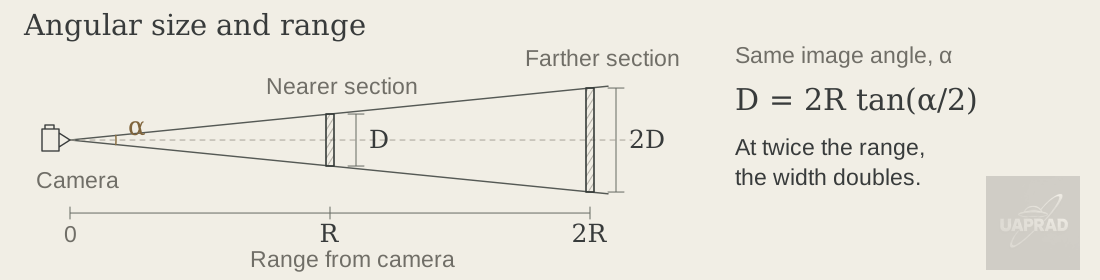
Evelyn and Paul Trent reported a slow-moving metallic object above their farm, and Paul made two photographs. The images preserve a distinct asymmetric disc-like outline, but contain no independent scale or range reference. Technical studies divide principally between a distant object and a small suspended model.
The photographs provide a clear disc-like image, but their scale remains the central unresolved issue.
Condon Report, Case 46: McMinnville photographs · Formal photographic case study
Great Falls film
5 or 15 August 1950 · Disc / saucer; Sphere / orb · Structured record
Nick Mariana and his secretary reported two bright objects, and Mariana recorded about 16 seconds of 16 mm film. His early description called them disc-shaped lights, but the surviving film mainly resolves bright sources. The Colorado study found aircraft difficult, though not impossible, to reconcile with the sequence and left the case unexplained.
The film records movement more clearly than shape; the disc description rests mainly on witness testimony.
Condon Report, Case 47: Great Falls movie film · Formal photographic case study
Nash–Fortenberry sighting
14 July 1952 · Disc / saucer · Structured record
Pan American pilots William Nash and William Fortenberry reported six glowing, disc-shaped objects passing below their DC-4 and reversing their order during a rapid turn. Project Blue Book told Nash in July 1953 that the report remained unsolved. No photograph or radar record fixes range, dimensions or velocity.
Two pilots gave a consistent account of six disc-like forms, while all dimensions and speeds remain visual estimates.
Project Blue Book correspondence with William Nash · Contemporary official correspondence
Father Gill sightings
26–27 June 1959 · Disc / saucer · Structured record
William Booth Gill and groups of mission witnesses described a large circular or platform-like object with a narrower upper section, apparent legs and figures. Gill made notes and sketches close to the observations and supporting statements were signed, but no image, radar record or physical trace establishes range or structure.
Prompt notes, sketches and signed statements preserve a detailed circular form; range and scale remain witness estimates.
Australian government file containing the Boianai reports · Near-contemporary government file
Socorro incident
24 April 1964 · Oval / egg; Disc / saucer · Structured record
Police officer Lonnie Zamora reported a white, egg-shaped object on apparent supports, with two small figures and a red marking, then flame, a roar and a rapid departure. The UAPRAD witness record preserves that oval description. He sketched the marking. Project Blue Book left the case unidentified. The same-day ground depressions record the site. The outline remains his description. The report stays linked to discs because later summaries sometimes flatten the egg into a saucer.
The close-range description is an egg-shaped body. The same-day marks do not supply that outline, and Blue Book’s unidentified conclusion leaves the identity open.
Project Blue Book case file: Socorro · Contemporary government case file
Valensole landing report
1 July 1965 · Oval / egg · Structured record
Maurice Masse, a lavender farmer, reported a compact landed object at about 05:45. The UAPRAD witness record says he described it as oval or rugby-ball-shaped, about the size of a small vehicle, on a central support or legs, with two short figures nearby. GEIPAN classifies the case D, an unidentified phenomenon with ground traces. No second person saw the object. Visitors had disturbed the marks before the gendarmerie documented them.
One witness supplies the oval description. The gendarmerie record preserves a ground mark after visitors had reached the site, and GEIPAN’s class D leaves the object unidentified.
GEIPAN case record: Valensole, 1 July 1965 · Official case record
Kecksburg acorn-shape claim
9 December 1965 · Oval / egg · Structured record
A multi-state fireball on 9 December 1965 was classified by Project Blue Book as a meteor. The UAPRAD case record separates that atmospheric event from later claims that an acorn- or bell-shaped metallic object was removed from woods near Kecksburg. Those shape claims were mostly collected decades later and conflict with contemporary statements that nothing was found. No photograph or fragment of an acorn-shaped body is in the public file.
The meteor classification accounts for the fireball. The acorn-shaped object remains a later, contested claim.
Project Blue Book file: Kecksburg and the 1965 fireball · Historical government case file
Westall school incident
6 April 1966 · Disc / saucer · Structured record
Students and at least one teacher reported one or more silver, grey or white disc-like objects in daylight. Contemporary reporting and Andrew Greenwood's near-contemporary account establish a significant sighting, but later claims of a landing, trace and official suppression exceed the early documentary record.
Early sources support a daylight disc report; the landing and suppression narratives developed later.
State Library Victoria: the Westall UFO event · Institutional historical account
Falcon Lake incident
20 May 1967 · Oval / egg; Disc / saucer · Structured record
Stefan Michalak reported two reddish objects, one of which descended nearby and appeared as a metallic disc or oval with an upper dome. Medical records documented burns and illness after the encounter, while Canadian agencies investigated damaged clothing and later site-associated samples. The physical aftermath is documented more securely than its connection to the object because Michalak was the sole direct witness and the site and samples lacked continuous independent custody.
The case joins a detailed disc-or-oval description to a documented medical aftermath, with the connection dependent on one direct witness.
Library and Archives Canada: the Falcon Lake incident, part 1 · Government archival account and records guide
Trans-en-Provence
8 January 1981 · Disc / saucer · Structured record
Renato Nicolai reported a small grey disc-like object with an equatorial band and apparent skids descending onto a terrace before departing. Gendarmes documented a circular ground trace the next day, and GEPAN coordinated soil and vegetation analysis. The prompt official work provides substantial trace evidence, but the object itself rests on a single visual account and ordinary mechanical causes remain relevant to the accessible site.
Prompt official sampling makes the ground trace unusually well documented; the reported object remains a single-witness observation.
GEPAN Technical Note No. 16: Trans-en-Provence trace analysis · Primary official technical report
O’Hare Airport sighting
7 November 2006 · Disc / saucer · Structured record
United Airlines employees reported a dark, sharply defined disc below low cloud near Gate C17 and described a rapid upward departure. Airline and Federal Aviation Administration communications establish that reports were made, but no authenticated image or public radar track resolves the object. A fallstreak hole is a strong explanation for the reported cloud opening, not necessarily for the preceding disc description.
Several aviation witnesses described a disc below cloud; their accounts and the institutional communications form the surviving evidence.
NARCAP technical report on the O’Hare incident · Aviation-safety case study
Continental Divide radar-visual report
26 January 1953 · Sphere / orb · Structured record
Air Force personnel reported a ball-shaped source with intermingled white, red and green light while an air-control and warning radar recorded an unidentified return. The Project Blue Book file links the visual and radar observations, but also records possible weather effects and a radiosonde release. The investigation remained incomplete and the source was unidentified.
The linked visual and radar reports give the case weight, although the file leaves weather and a radiosonde as unresolved factors.
Project Blue Book case file: Continental Divide, January 1953 · National Archives case-file reproduction
Warren daylight report
17 August 1958 · Sphere / orb; Disc / saucer; Oval / egg · Structured record
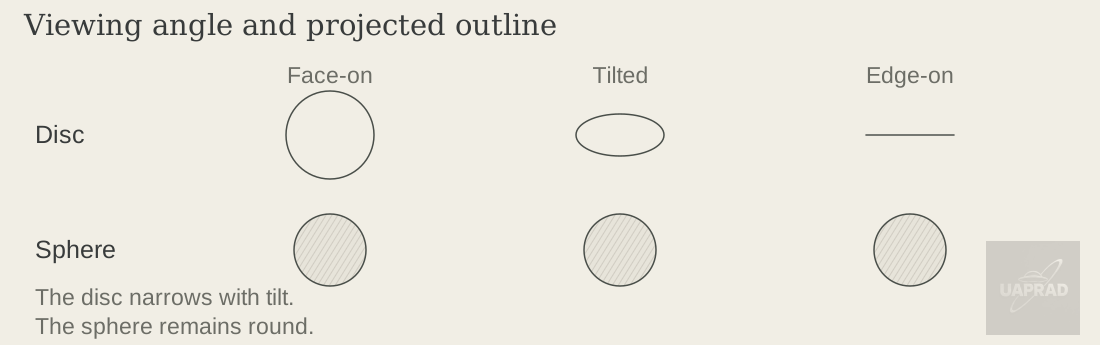
A civilian observer using field glasses described a bright circular grey-white form with concentric detail. As it rotated and departed, he reported an elongated, centrally raised profile. Project Blue Book left the case unidentified. The changing appearance makes it useful for studying viewing aspect and cross-category assignment, but the single account supplies no measured range or image.
The reported change from round to elongated shows how viewing angle can move one observation between shape categories.
Project Blue Book case file: Warren, August 1958 · National Archives case-file reproduction
Cazères-sur-l’Adour luminous-ball report
1 November 2002 · Sphere / orb · Structured record
A witness reported a fire-coloured ball accompanied by several flashing lights and brief changes of direction. GEIPAN classifies the case D. The published record gives no reliable range or surface detail, so the report remains an unresolved luminous observation.
The record supports a luminous-ball description, with too little detail to determine a solid spherical form.
GEIPAN case record: Cazères-sur-l’Adour, 1 November 2002 · Official case record
AARO Middle East orb
2022 · Sphere / orb · Structured record
An MQ-9 electro-optical sensor recorded a round target that AARO describes as a spherical object. AARO retains the case in its Active Archive because poor data prevent conclusive attribution and states that the target did not appear to exhibit anomalous performance. The public material supports an official apparent-sphere classification more strongly than a resolved three-dimensional form.
AARO’s spherical label describes the target’s round image; the released data provide limited depth and range information.
AARO Mission Brief 2025 · Official case and programme briefing
PURSUE PR053 infrared recording
15 October 2022 · Sphere / orb; Cigar / cylinder · Structured record
The uploader-defined title describes the target as ‘cigar shaped or fast spherical’. AARO identifies the source as likely military infrared imagery and states that the media was digitally altered before upload; the released file also contains slowed replays. The record preserves genuine morphology ambiguity and cannot distinguish physical outline from motion, optics and processing.
The altered file leaves the spherical and elongated labels used in its title equally uncertain.
AARO / DVIDS: DOW-UAP-PR053 · Officially released sensor media and description
Western United States ‘mother orb’ reports
October 2023 · Sphere / orb · Structured record
Six federal agents in three teams reported orange luminous objects that they called ‘mother orbs’, with smaller red lights appearing nearby. AARO correlated about 60 per cent of the reported activity with military infrared-countermeasure flares and retained a residual for further investigation. The residual hypothesis rests on testimony and exclusion, without event imagery or technical measurements.
AARO associated most reported activity with flares; testimony forms the evidence for the remaining orb reports.
AARO: Western United States Event analysis update · Official case-analysis memorandum
Northeastern United States red-sphere report
1 July 2025 · Sphere / orb · Structured record
Two witnesses reported brilliant red spheres with bright white centres moving silently near a tree line and apparently merging as they departed. AARO’s release records the FBI’s favourable credibility assessment and includes government-hosted video. Neither supplies a reliable range, surface detail or an independent basis for interpreting the apparent merger.
The video and two accounts preserve the luminous appearance, while range and the reported merger remain uncertain.
AARO / DVIDS: FBI-UAP-PR004 Northeastern Orb Sighting · Official witness-video release and case description
Tremonton film
2 July 1952 · Sphere / orb; Disc / saucer · Structured record · Control comparison
Delbert Newhouse filmed a group of bright sources moving in a clear sky. A later account described paired-saucer profiles, but the early record and film did not resolve metallic structure. The Colorado study found the film consistent with birds and treated the later disc description as less secure than the original account.
The bird interpretation fits the film and shows how later shape descriptions can exceed the recorded image.
Condon Report, Case 49: Tremonton movie film · Formal photographic case study
Tucson / Davis–Monthan spherical-object report
6 August 1952 · Sphere / orb · Structured record · Control comparison
Military tower observers and a C-47 pilot reported a brilliant spherical object without visible projections or exhaust. The local Air Intelligence report assessed the source as a balloon. The case is a useful control because comparatively detailed military testimony supported spherical appearance without requiring an unconventional object.
The balloon assessment provides a documented conventional source for a bright, apparently featureless sphere.
Air Intelligence report: Tucson, 6 August 1952 · Archival reproduction of official case material
Midwest City bright-ball report
20 July 1958 · Sphere / orb · Structured record · Control comparison
A military observer reported a very large bright white ball apparently hovering near the horizon and emitting heat-wave-like distortion. Project Blue Book evaluated the sighting as refraction associated with Jupiter. The file shows how an astronomical point source and atmospheric conditions can acquire apparent size, proximity and surface activity.
Project Blue Book favoured Jupiter and atmospheric refraction as an explanation of the reported appearance.
Project Blue Book case file: Midwest City, July 1958 · National Archives case-file reproduction
Saint-Usuge luminous-ball report
7 April 1980 · Sphere / orb · Structured record · Control comparison
Two motorists reported a red-orange luminous ball whose apparent position changed during an extended night drive. GEIPAN ultimately attributed the observation to the Moon and the changing viewing geometry. The case is a control for apparent hovering or jumping when a distant astronomical source lacks stable distance cues.
GEIPAN’s reconstruction shows how changing viewing geometry made the Moon appear to hover and shift position.
GEIPAN case record: Saint-Usuge, 7 April 1980 · Official resolved case record
La Seyne-sur-Mer bright-sphere report
17 July 2021 · Sphere / orb · Structured record · Control comparison
A witness described a smooth bright sphere, likened to a pétanque ball, descending on a straight path under clear conditions. GEIPAN classifies the case A and identifies a Mylar balloon. The report is a close descriptive analogue for metallic-orb claims and demonstrates that a convincing bounded appearance can have a conventional source.
The identified Mylar balloon closely matches reports of smooth, bright spheres moving steadily in daylight.
GEIPAN case record: La Seyne-sur-Mer, 17 July 2021 · Official resolved case record
Artigues-près-Bordeaux metallic-sphere report
25 January 2025 · Sphere / orb · Structured record · Control comparison
Two witnesses reported a black metallic-looking sphere moving slowly and in a straight line during daylight. GEIPAN classifies the case B and assesses a Mylar balloon as probable. It provides a recent control closely matching the surface, form and motion often used to distinguish ‘metallic orbs’ from luminous points.
The probable Mylar balloon matches the dark metallic appearance and slow straight movement reported by both witnesses.
GEIPAN case record: Artigues-près-Bordeaux, 25 January 2025 · Official case record and probable resolution
Disc-like photographic controls
Published 1968 · Disc / saucer · Structured record · Control comparison
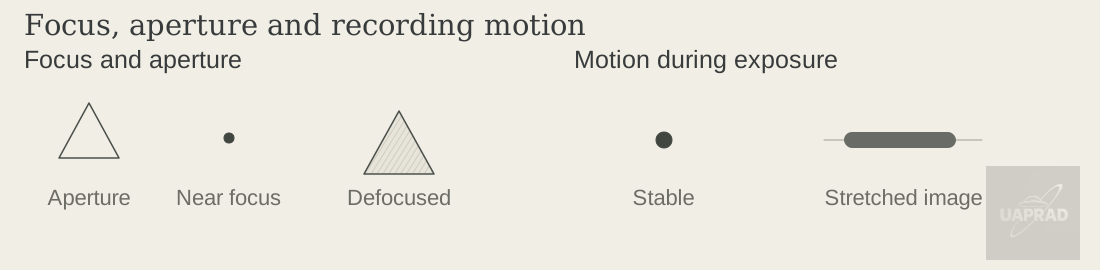
The Colorado photographic study reproduced disc-like images with thrown and suspended models and documented lenticular clouds, internal reflections, film damage and balloons as recurrent sources of saucer-like photographs. These controls do not resolve contested cases automatically; they identify tests that a disc image must survive.
The experiments identify practical checks for scale, focus, reflection, damage and small-model explanations in disc photographs.
Condon Report: analysis of UFO photographic evidence · Technical and experimental analysis
Belgian wave triangular-form reports
29 November 1989–April 1990 · Triangle; Diamond / angular · Structured record
Civilian and police witnesses reported dark triangular or delta-like forms with corner lights, central illumination and slow or hovering movement. The Belgian Air Force statement documents the later F-16 response. Those radar contacts occurred separately and provide no evidence about the shapes described in the visual reports.
Selected visual reports describe a coherent triangular form; the later radar episode is a separate evidence stream.
UK National Archives: Belgian UFO wave records guide · Official archival guide to the Belgian military record
Illinois police-witness sequence
5 January 2000 · Triangle · Structured record
Police witnesses at separated locations described a large, low and unusually quiet form moving across southern Illinois. Their accounts varied between triangle, arrowhead and house-like comparisons, but several included a coherent body rather than lights alone.
Separated police observations strengthen the event sequence and body description, although range and size were estimated visually.
NUFORC report by Highland police officer Craig Stevens · Direct witness submission
Damon police encounter
3 September 1965 · Triangle · Structured record
Two sheriff’s deputies reported a large triangular object with a purple light at each end and a long blue light between them. The surviving Project Blue Book file preserves a close apparent-form report, but the estimated dimensions and distance were not independently measured.
Two deputies described the same triangular light pattern and body, with size and distance left unmeasured.
Project Blue Book case file: Damon, Texas · Contemporary government case file
Rendlesham triangular-form accounts
26–28 December 1980 · Triangle · Structured record
Lieutenant Colonel Charles Halt’s memorandum of 13 January 1981 relays patrolmen’s description of a metallic triangular object with red and blue lights. Halt separately records later light observations that he witnessed. The early document therefore preserves a triangular-body claim, although its first paragraph is a report of others’ observations and its dates require comparison with the wider chronology.
A triangular-body description is present in the early memorandum; its attribution to patrolmen distinguishes it from Halt’s own later observations.
Charles Halt memorandum: Unexplained Lights · Contemporary military memorandum
Cosford and Shawbury reports
31 March 1993 · Triangle · Structured record
Reports collected during the wider March 1993 British sighting sequence included a large triangular object seen by a meteorological officer at RAF Shawbury. The Ministry of Defence file preserves official inquiry and competing explanations, but no calibrated image or measured range establishes the reported structure.
The Shawbury account provides the principal triangular description, supported by official correspondence; shape and scale rely on witness estimates.
Ministry of Defence UFO file DEFE 24/2053 · Official file reproduction
Kenneth Arnold chain near Mount Rainier
24 June 1947 · Boomerang / chevron · Structured record
Kenneth Arnold, flying alone, reported nine bright objects in a chain north of Mount Rainier. In the written report and drawing he submitted on 12 July 1947, a level view was a thin black line and a sun flash looked completely round. He also uses saucer-like wording. The drawing caption says the objects seemed longer than wide, with a thickness about one-twentieth of their width. The July report does not use boomerang, chevron or crescent. The UAPRAD witness record describes the drawing as a rounded leading edge with a rear indentation, and records the 26 June radio interview comparing the form with a pie plate cut in half and a convex triangular rear. His speed, about 1,200 miles per hour, depends on the path he assumed between the peaks.
The July drawing records a thin form, longer than wide, from a chain of nine objects. The boomerang label describes that drawing. It is not Arnold’s word, and the same report includes a round flash and saucer-like comparisons.
Kenneth Arnold’s written report and drawing · Contemporary witness record
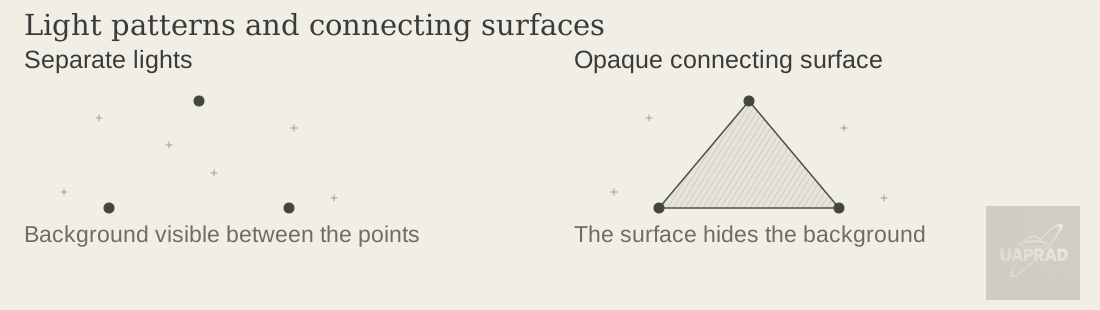
Carmichael delta-form report
23 June 1957 · Triangle; Boomerang / chevron · Structured record
A witness described a dark delta or boomerang-like form crossing the sky. Project Blue Book preserved the account and drawing. The brief observation contains no measured scale or reliable three-dimensional detail.
The drawing preserves an early delta-like outline from one brief observation; scale relies on the witness estimate.
Project Blue Book case material: Carmichael, 23 June 1957 · Archival reproduction of official case records
Villers-lès-Luxeuil triangular-object report
26 November 2019 · Triangle · Structured record
Two motorists travelling in separate vehicles reported a dark triangular form near Villers-lès-Luxeuil. GEIPAN classified the case D1 but cautioned that the accounts were not entirely independent. Investigators examined documented Robin DR400 and Mirage traffic; timing, angular elevation and apparent size limited those matches. No photograph or measured object range survives.
Two related accounts preserve a triangular appearance; partial dependence between them and imperfect aircraft matches limit physical interpretation.
GEIPAN case record: Villers-lès-Luxeuil, 26 November 2019 · Official unresolved case record
Nantes triangular-light control
20 October 2013 · Triangle · Structured record · Control comparison
A triangular arrangement of lights was identified by GEIPAN as the Hyades star cluster. The case shows how a familiar celestial pattern can be perceived as a structured configuration when reference and orientation are poor.
The Hyades identification shows how fixed stars can be perceived as a triangular object in a dark sky.
GEIPAN case record: Nantes, 20 October 2013 · Official resolved case record
Pia three-light control
11 July 2024 · Triangle · Structured record · Control comparison
Three orange lights forming a triangle were assessed by GEIPAN as probably Thai lanterns. Their stable arrangement arose from separate drifting lights, showing why a triangular pattern need not mark the outline of one body.
The probable lantern identification provides a direct comparison for three drifting lights perceived as one triangle.
GEIPAN case record: Pia, 11 July 2024 · Official probable-resolution record
Chiles–Whitted encounter
24 July 1948 · Cigar / cylinder · Structured record
Two Eastern Air Lines pilots reported a fast, wingless and elongated object with a row of illuminated openings and a rearward flame or exhaust-like feature. A passenger reported a bright light but did not independently resolve the same structure.
The two pilots gave a coherent elongated-body description, and the passenger independently reported a bright light.
Air Intelligence Report No. 100-203-79 · Contemporary intelligence report
New Delhi flying-club report
15 March 1951 · Cigar / cylinder · Structured record
Witnesses at a flying club described a metallic cigar or bullet-shaped object crossing the sky. The surviving Project Blue Book record card contains conflicting evaluation markings, including possible-balloon and unidentified indications; it should not be presented as an unqualified official unknown.
The official file preserves the elongated description but gives conflicting conclusions about identification.
Project Blue Book case file: New Delhi, March 1951 · Archival reproduction of official case-file scans
Coyne helicopter encounter
18 October 1973 · Cigar / cylinder · Structured record
Four Army Reserve helicopter crew members reported an elongated grey object approaching their aircraft and illuminating the cockpit with green light. The case retains a coherent close-range morphology, but later reconstructions differ on structure, distance and the reported change in altitude.
Four crew members reported the same elongated form and cockpit illumination, while later accounts differ on structure and distance.
Army Reserve report: Coyne helicopter encounter · Reproduction of the contemporary military report
Alderney elongated-object observations
23 April 2007 · Cigar / cylinder · Structured record
Commercial pilot Ray Bowyer reported two bright elongated objects, and a second pilot offered partial corroboration from another position. The technical study explored geometry and atmospheric-optics hypotheses, but uncertain range leaves physical size and precise form unresolved.
Observations from two aircraft support an elongated appearance, while the uncertain range controls every estimate of size and form.
Report on Aerial Phenomena near the Channel Islands · Technical case report
Châtel-Montagne elongated-object report
Summer 1998; reported in 2014 · Cigar / cylinder · Structured record
A witness retrospectively described a silent, dark elongated object observed during childhood. GEIPAN classified the case C because the delay and limited surviving information prevented a reliable investigation. It is useful as a documentation limit, not a strong physical-form case.
The long reporting delay leaves the shape dependent on one retrospective account.
GEIPAN investigation report: Châtel-Montagne · Official investigation report
Pierrelatte linear-light control
22 June 2023 · Cigar / cylinder · Structured record · Control comparison
A line of lights perceived as an elongated object with illuminated openings was identified by GEIPAN as a Starlink satellite train. The case demonstrates perceptual grouping: aligned points can imply one structured body when separation is not resolved.
The Starlink identification shows how aligned lights can be perceived as one long body with illuminated openings.
GEIPAN case record: Pierrelatte, 22 June 2023 · Official resolved case record
Émancé aircraft-projection control
14 September 2024 · Cigar / cylinder; Capsule / ‘Tic Tac’ · Structured record · Control comparison
A witness recorded an elongated luminous form that GEIPAN matched to a Vueling Airbus A321. Aspect and lighting suppressed the aircraft’s finer structure, leaving a fuselage-like profile. The case is a direct control for wingless appearance at distance.
The flight-data match shows how distance, angle and lighting can reduce an aircraft to a wingless elongated profile.
GEIPAN case record: Émancé, 14 September 2024 · Official resolved case record
AARO Western United States sensor control
Published 26 February 2024 · Cigar / cylinder · Structured record · Control comparison
AARO resolved an infrared recording as three distant commercial aircraft and attributed their distorted apparent shapes to sensor vibration. The case shows that physical targets can be present while the recorded elongation remains an imaging effect.
Flight data and sensor analysis trace the elongated images to aircraft distorted by platform vibration.
AARO case resolution: Western United States UAP · Official case resolution
USS Nimitz visual encounter
14 November 2004 · Capsule / ‘Tic Tac’ · Structured record
Commander David Fravor and Lieutenant Commander Alex Dietrich, in two F/A-18Fs from USS Nimitz, were sent by USS Princeton towards a radar contact. In a written statement on 26 July 2023, Fravor says that all four aircrew saw a small white Tic Tac over a patch of white water, aligned north–south, with no rotors, rotor wash or wings. The UAPRAD witness record for Dietrich corroborates a white oblong and the disturbed water, and it is more limited about performance. The close pass was brief, and the range was not measured.
Two pilots describe a white, wingless oblong in daylight. The reported size, the sudden departure and the later radar association remain estimates and a controller’s call, not released measurements.
David Fravor, written statement to the House Oversight Committee, 26 July 2023 · Sworn witness statement
FLIR1 infrared recording
14 November 2004 · Capsule / ‘Tic Tac’ · Structured record
A later Nimitz crew recorded an infrared target with an F/A-18 targeting pod. The clip was circulated in 2017 and later posted by DVIDS as Navy imagery. The released frames show a featureless infrared source. They do not resolve rounded ends, a smooth casing or the absence of wings. Fravor identifies the clip with the object seen earlier. The public file contains no range, and changes in sensor mode can imitate abrupt motion.
The recording is an infrared target from a later sortie. It leaves the capsule outline unresolved, and it does not by itself identify the earlier visual object.
DVIDS: FLIR UAP video · Officially released Navy imagery
Paris oblong-fuselage control
20 May 2017 · Capsule / ‘Tic Tac’ · Structured record · Control comparison
A witness watching a bright point through binoculars described a grey-silver oblong that seemed solid and metallic, with a darker circular area. GEIPAN classified the case B and attributed the oblong to a distant aircraft fuselage reflecting the Sun, with the wing seen edge-on. The observation lasted about 15 seconds and rests on one witness.
Sun angle and viewing aspect can reduce a distant aircraft to a solid-looking oblong while concealing the wing planform.
GEIPAN case record: Paris, 20 May 2017 · Official probable-resolution record
Hudson Valley V-shaped light reports
Summer 1984 · Boomerang / chevron · Structured record
On 25 August 1984 the New York Times reported a summer of strange objects over the Hudson Valley and western Connecticut, usually a V or a circle, about the size of a football field, noiseless, and outlined in white, red or green lights. The state police called the object five or six small planes in a tight formation. Sgt Kenneth V. Spiro of Troop K said a trooper tracked one formation to Stormville Airport, where light planes flew with black-painted undersides and lights that changed colour and gave the shape. He did not name the trooper or the pilots. In the same article, William Pollard described a rigid triangle that hovered and climbed, and said the formation aircraft were nothing like that first sighting. Irene Lunn described an L-shaped arrangement over a house. The UAPRAD case record places this summer in a longer 1982–1986 series.
A named state-police sergeant told the Times that a trooper followed one light formation to aircraft at Stormville Airport. Witnesses in the same article distinguish other sightings from those aircraft, so the formation account covers the followed flights and leaves a residual.
New York Times: Strange sights brighten the night skies upstate · Contemporary news report of a state-police statement
Phoenix videotaped light display
13 March 1997 · Boomerang / chevron · Structured record · Control comparison
In a 26 July 1997 Associated Press report, Capt. Drew Sullins of the Maryland Air National Guard said eight A-10s flew training missions on 13 March over the Barry M. Goldwater Range, 60 miles southwest of Phoenix. They dropped high-intensity flares from 15,000 feet, then dumped the remaining flares at high altitude before returning to Davis-Monthan Air Force Base. Sullins said a pilot called it “one hell of a light show.” The report connects that display with lights captured on videotape. It also says the flare account leaves sightings from northwestern Arizona, up to 200 miles away, unexplained. The UAPRAD case record places this statement against the later, stationary lights and keeps the earlier moving V separate. The row is listed here because those later lights were absorbed into the boomerang story.
Sullins’s statement attributes the videotaped lights to flares dropped and then dumped by Maryland Air National Guard A-10s. The same report leaves northwestern Arizona sightings outside that account, and it does not describe the earlier moving V.
Associated Press: Flares, not UFOs, caused light show, military says · Contemporary news report of a military statement
DOW-UAP-PR28, Greece
January 2024 · Diamond / angular · Study summary
The mission report described the UAP as diamond-shaped. AARO's video narrative compared the visible contrast area to an inverted teardrop with a trailing vertical mass. The two official descriptions differ, leaving the shape uncertain.
DOW-UAP-PR28, Greece · Official release and descriptive metadata
UK Ministry of Defence UFO Report 1997
1997 · Diamond / angular · Study summary
The log records diamond descriptions at Edinburgh on 7 May, Norwich on 30 June, North Weald on 5 August and the River Humber near Brough on 10 October. The Norwich entry allows either a triangular or diamond form. All four are brief intake summaries with no validated geometry.
UK Ministry of Defence UFO Report 1997 · Official report intake log
UK Ministry of Defence UFO Report 1998
1998 · Diamond / angular · Study summary
The log records diamond descriptions at Halifax on 24 February, Barking on 13 July and Ventnor on 20 December. The short entries contain too little detail to reconstruct range or form.
UK Ministry of Defence UFO Report 1998 · Official report intake log
Navy night-vision triangle imagery
Recorded before May 2022 · Pyramid · Study summary
At the 17 May 2022 hearing, Deputy Director of Naval Intelligence Scott Bray said Navy personnel had recorded apparent triangles through night-vision goggles and a single-lens reflex camera. He attributed the triangular appearance to the optical system and said the lights were reasonably correlated with unmanned aerial systems.
Navy night-vision triangle imagery · Congressional hearing transcript
Lakeville pyramid report
4 July 2010 · Pyramid · Study summary
The submission describes a light-brown pyramid with an illuminated underside and a rotating upper portion, and lists 25 observers. NUFORC publication establishes the submitted account, not independent corroboration of its estimates or physical interpretation.
Lakeville pyramid report · Original witness submission; uncorroborated
Douglas pyramidal-light report
Approximately 29 June 1994 · Pyramid · Study summary
The submission, filed on 18 September 1998, gives an approximate June 1994 event date and lists three observers. It describes a moving tower-like arrangement of lights. One observer reportedly saw stars between the lights through a 20-power scope, favouring a light configuration over a visibly continuous body.
Douglas pyramidal-light report · Original witness submission; uncorroborated
UK Ministry of Defence UFO Report 1997
1997 · Rectangular · Study summary
The log records a shiny metallic rectangular object at Beith on 21 July and a rectangular object with three bright lights and a red rear light at Bampton on 4 August. Both entries lack range, dimensions and identifying detail.
UK Ministry of Defence UFO Report 1997 · Official report intake log
UK Ministry of Defence UFO Report 2001
2001 · Rectangular · Study summary
The log records square or square-grid descriptions at Liverpool on 13 January and Shoeburyness on 19 August, followed by a rectangular-or-triangular description at Royston on 2 September. The shape language remains ambiguous and no structure was confirmed.
UK Ministry of Defence UFO Report 2001 · Official report intake log
East Coast near-miss description relayed by Ryan Graves
2014 operational period; testimony 26 July 2023 · Cube within a sphere · Study summary
Graves recounts another pilot seeing a dark cube inside a clear sphere during a near miss. The statement places the episode in squadron operations and mentions a safety report. It supplies no public image of the compound form or separately recorded statement from that observer.
East Coast near-miss description relayed by Ryan Graves · Congressional testimony relaying a pilot’s observation
UK Ministry of Defence UFO Report 2000
2000 · Ring / torus · Study summary
A Cheshire entry dated 9 January describes a ring-shaped object eclipsing the Moon. It provides no distance, identifying detail or evidence of a hollow body.
UK Ministry of Defence UFO Report 2000 · Official report intake log
UK Ministry of Defence UFO Report 2001
2001 · Ring / torus · Study summary
The log records a circular object with a ring at Whitchurch on 28 February, nested rings at Humberside on 20 May, a horizontal ring with a tail at Buxton on 14 August and a circle within a circle at Abbotskerswell on 17 August. None includes enough detail to determine whether the source was annular.
UK Ministry of Defence UFO Report 2001 · Official report intake log
Puerto Nuevo cross-shaped report
31 December 1997 · Cross / cruciform · Study summary
A submission filed on 12 January 1998 describes a cross-like appearance on 31 December 1997 and lists five observers. Steady white lights, a flashing red light and apparent stationarity are reported. The account was posted on 7 March 1998; the database contains no independent investigation or attached drawing.
Puerto Nuevo cross-shaped report · Original witness submission; uncorroborated
Statesboro cross-light report
16 August; year amended to 2015 · Cross / cruciform · Study summary
The current database entry dates the event and submission to 16 August 2015 and notes a NUFORC year amendment without displaying the earlier year. The witness describes six bright lights in a cross and a subsequent turn; no image is attached.
Statesboro cross-light report · Original witness submission; uncorroborated
Southmont cross-shaped reports
5 February 2016 · Cross / cruciform · Study summary
Two listed observers reported five passing objects, several described as cross-shaped. The account also records low sound and red beacons, features that require conventional-aircraft comparison before the shapes are treated as anomalous bodies.
Southmont cross-shaped reports · Original witness submission; uncorroborated
CSN VOR aviation report GEN-2022-97
22 May 2022 · Dumbbell / compound · Study summary
A de-identified flight-instructor account describes a stationary dark object as a vertical dumbbell or engine block during an alleged near collision. The publisher states that the witness filed a NASA Aviation Safety Reporting System report, but that underlying record has not been independently located in the public database.
CSN VOR aviation report GEN-2022-97 · Publisher-mediated aviation account
Church Stowe / Weedon account
22 November 1978 · Dumbbell / compound · Study summary
Elsie Oakensen later described a smooth grey dumbbell-shaped object with red and green lights above the A5. The available source review reports no located investigation file and separates the initial sighting from more extraordinary material recovered later through disputed memory techniques.
Church Stowe / Weedon account · Secondary historical compilation
Governor Haydon Burns aircraft encounter
25 April 1966 · Dumbbell / compound · Study summary
A later chronology, citing a contemporary NICAP bulletin, records two apparently connected yellow or orange globes pacing an aircraft carrying Florida Governor Haydon Burns, officials and journalists. The linked page is a secondary compilation rather than the original witness statements or flight record.
Governor Haydon Burns aircraft encounter · Secondary historical compilation
DOW-UAP-PR33, Syria
October 2024 · Irregular / shape-changing · Study summary
The mission report described a misshapen, uneven ball of white light. AARO's video narrative records two short-lived, semi-transparent irregular areas and notes a reported glare halo.
DOW-UAP-PR33, Syria · Official release and descriptive metadata
DOW-UAP-PR32, Syria
October 2024 · Irregular / shape-changing · Study summary
AARO described an irregular area of colour and brightness resembling a bisected half-oval. The image is unresolved and shows no clear physical structure.
DOW-UAP-PR32, Syria · Official release and descriptive metadata
UK Ministry of Defence UFO Report 2000
2000 · Irregular / shape-changing · Study summary
The log records a pulsing light changing shape near Beeston on 16 April, a round-to-elliptical change at Glasgow on 8 May, a cluster changing from triangular forms to crosses at Salisbury on 27 July and several objects changing shape at Basildon on 10 September. The brief descriptions give no basis for deciding whether any source physically changed shape.
UK Ministry of Defence UFO Report 2000 · Official report intake log
Eglin rounded/conical object
26 January 2023 · near Eglin Air Force Base, Florida · Sphere / orb · Case record
The pilot reported four radar contacts but visually observed and photographed one object. AARO compared the rounded/conical description and infrared contrast with a large lighting balloon.
AARO’s lighter-than-air identification has moderate confidence. Its analysis of the visible object does not resolve the three other reported radar contacts.
AARO: Eglin UAP case resolution, 14 October 2023 · Official analysis of the pilot report, still images and balloon comparison
Douai triangular-form report
27 March 2022 · Douai, France · Triangle · Case record
A single witness described a sharply outlined luminous triangle with smaller lights along two sides during a 10–20-second observation. The account was submitted the following day; GEIPAN later investigated the site and aircraft and drone alternatives.
GEIPAN retains class D. A drone remained a considered candidate, with mismatches in appearance and sound; there is no photograph or second published observer.
GEIPAN: Douai, 27 March 2022 · Official investigation summary and links to the report and witness questionnaire
Montluel dark rectangular form
14 May 2022 · Montluel, France · Rectangular · Case record
A balcony observer reported an unlit charcoal-grey rectangle crossing the sky in about eight seconds and disappearing behind a hill. The questionnaire was completed three days later; a subsequent field survey examined the terrain and viewing geometry.
GEIPAN retains class D. Its lower size and speed estimates depend on the reported hill occlusion and angular extent; they are reconstruction results rather than direct range measurements.
GEIPAN: Montluel, 14 May 2022 · Official field-investigation summary, with reconstruction and witness documents
Lubbock visual and photographic sequences
August–September 1951 · Lubbock, Texas · Boomerang / chevron · Case record
The professors’ moving-light reports and Carl Hart’s V-shaped photographic sequence were grouped under the Lubbock label. In his 1956 account, Ruppelt describes differences in formation and brightness and the lack of a measured altitude.
The formation in a photograph cannot be transferred to another night’s observation as evidence of a single swept body. Ruppelt’s retrospective account keeps the photograph investigation distinct from the professors’ observations.
Edward J. Ruppelt: The Lubbock Lights, Unabridged (1956) · Investigator’s retrospective account, chapter 8, reproduced text
North Devon flying-cross reporting cluster
October 1967 · North Devon; parliamentary response 8 November 1967 · Cross / cruciform · Case record
Parliamentary questions refer to a star-shaped cross near Okehampton and reports from police and engineers. The minister’s response addresses several October reports, including aircraft, Venus and lights not positively identified.
The response does not assign one explanation to every reported light. This entry represents a reporting cluster and its official discussion, not one independently reconstructed flight.
Hansard: Unidentified Flying Object (North Devon), 8 November 1967 · Parliamentary questions and the minister’s response concerning the October reports
Aguadilla infrared sequence and competing reconstructions
April 2013 · Aguadilla, Puerto Rico · Irregular / shape-changing · Case record
The infrared sequence has been interpreted as one object splitting and entering water. AARO’s March 2025 model instead places two objects moving over land; SCU subsequently requested the model coordinates, uncertainty and occlusion-analysis method.
AARO distinguishes high confidence in its performance and separation findings from moderate confidence in a sky-lantern identification. The comparison turns on reconstructed range and target continuity rather than the outline of an isolated frame.
AARO: The Puerto Rico Object, 20 March 2025 · Official reconstruction addressing apparent splitting, motion and water entry
 Disc / saucerCircular or flattened objects described as discs, saucers or lenticular forms.
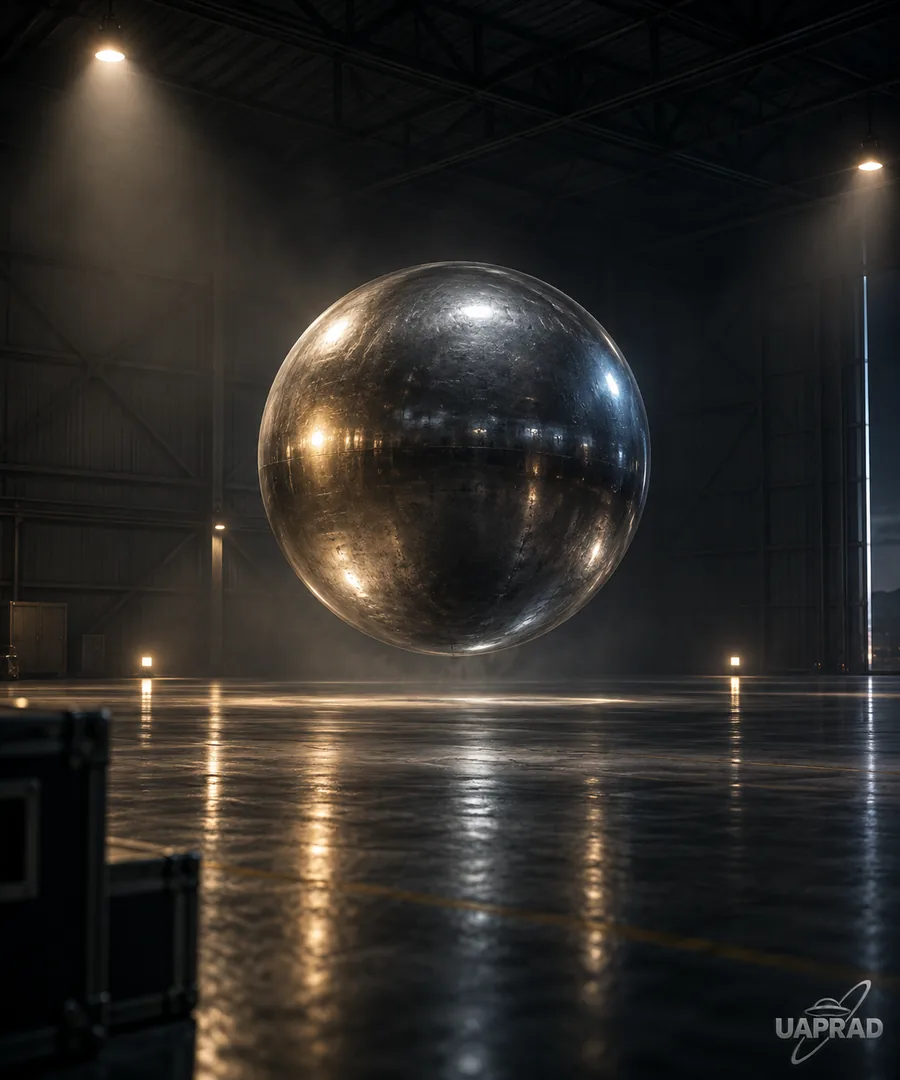 Sphere / orbSpherical objects and unresolved lights whose apparent boundary is circular.
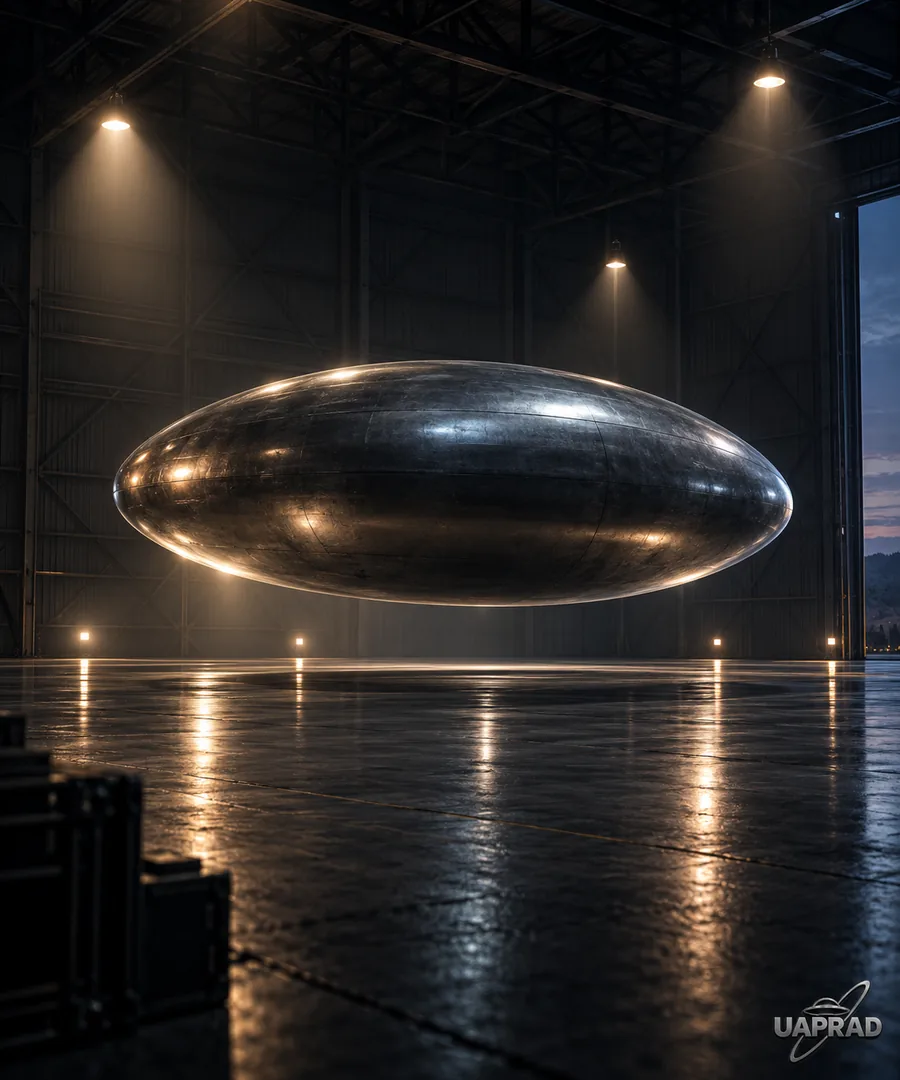 Oval / eggRounded forms described as oval, ovoid, egg-shaped or acorn-like.
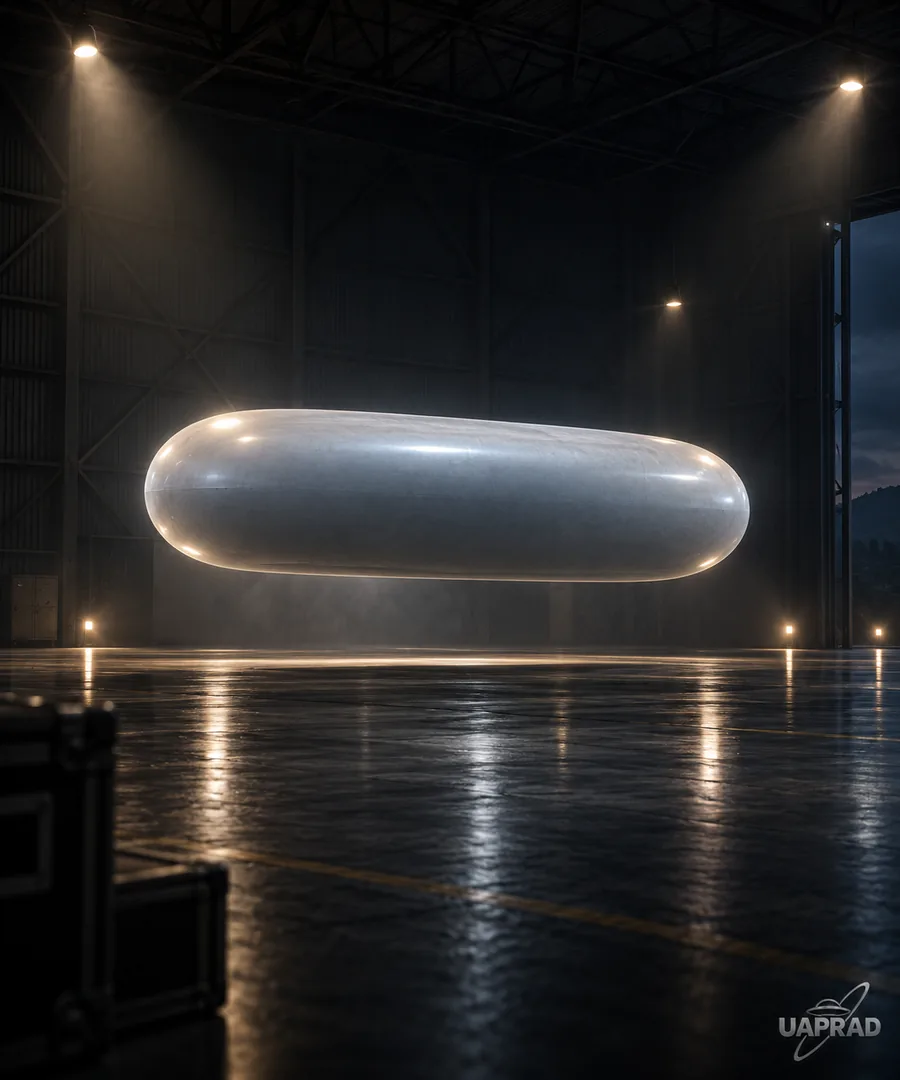 Capsule / ‘Tic Tac’Smooth, rounded and apparently wingless oblong forms associated with modern aviator reports.
 Cigar / cylinderElongated forms described as cylinders, cigars, fuselages or torpedoes.
 TriangleTriangular bodies or arrangements of lights interpreted as a single triangular object.
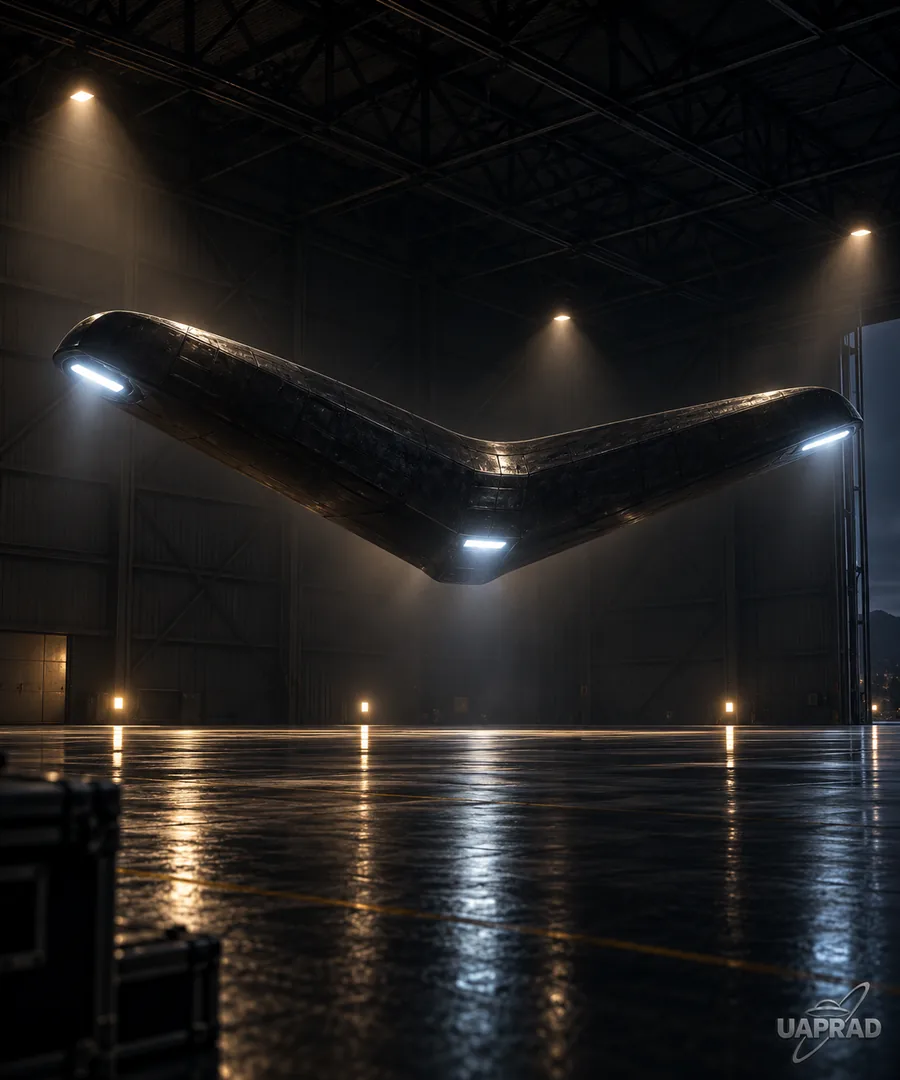 Boomerang / chevronSwept, crescent, V-shaped or chevron forms, including formations perceived as one object.
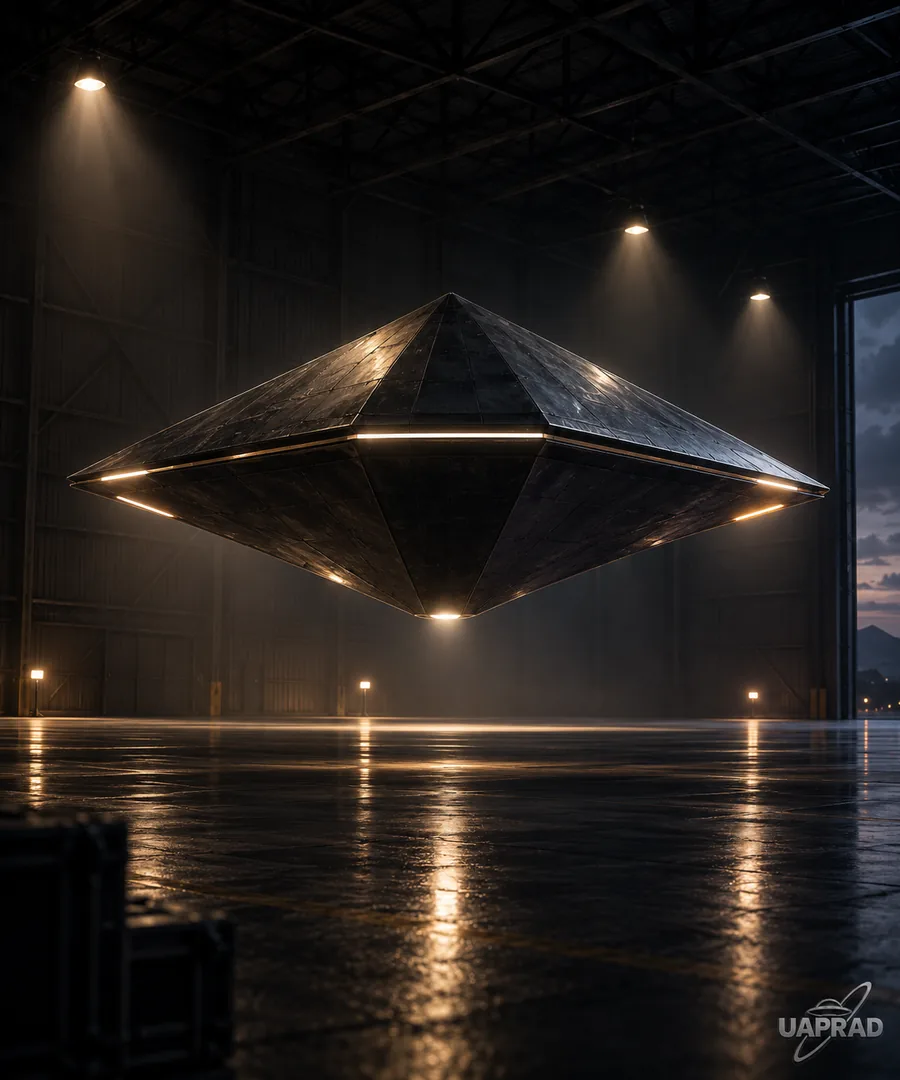 Diamond / angularDiamond, lozenge and sharply angular forms that do not fit the disc or triangle families.
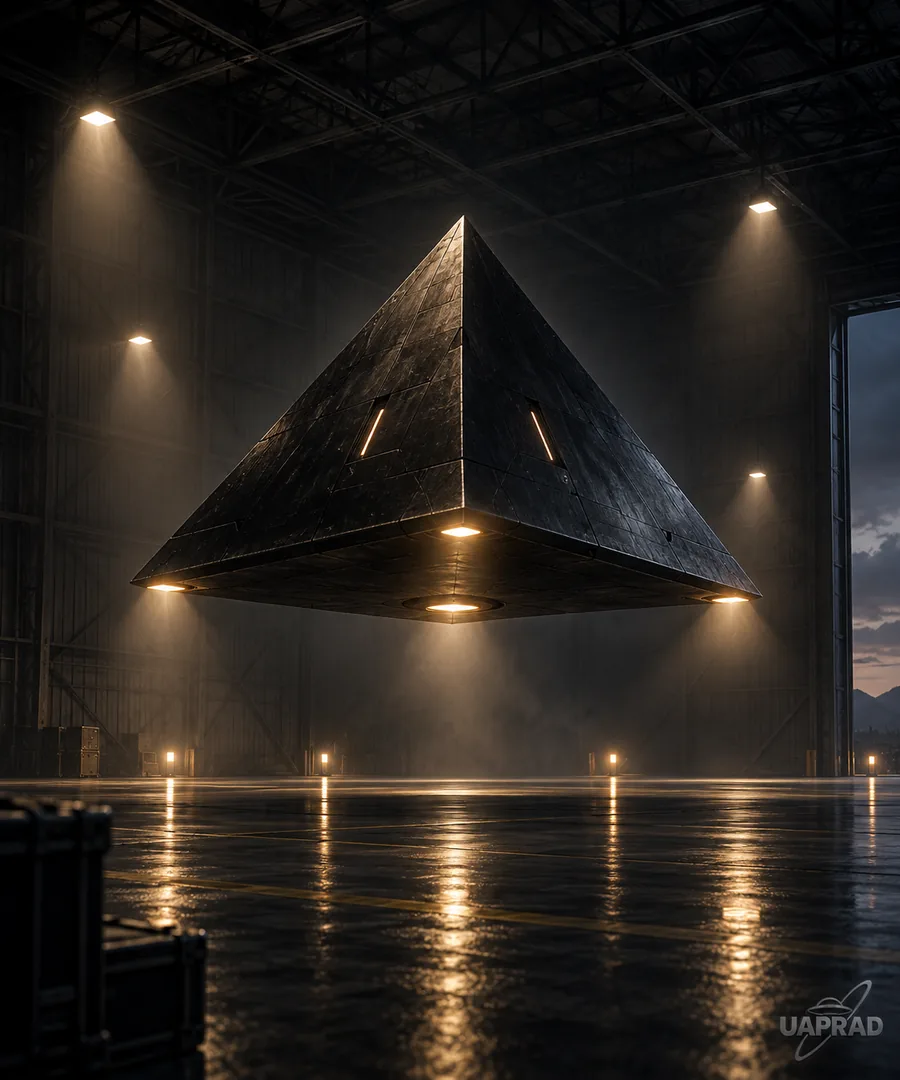 PyramidApparent three-dimensional pyramids and triangular light forms recorded through optical systems.
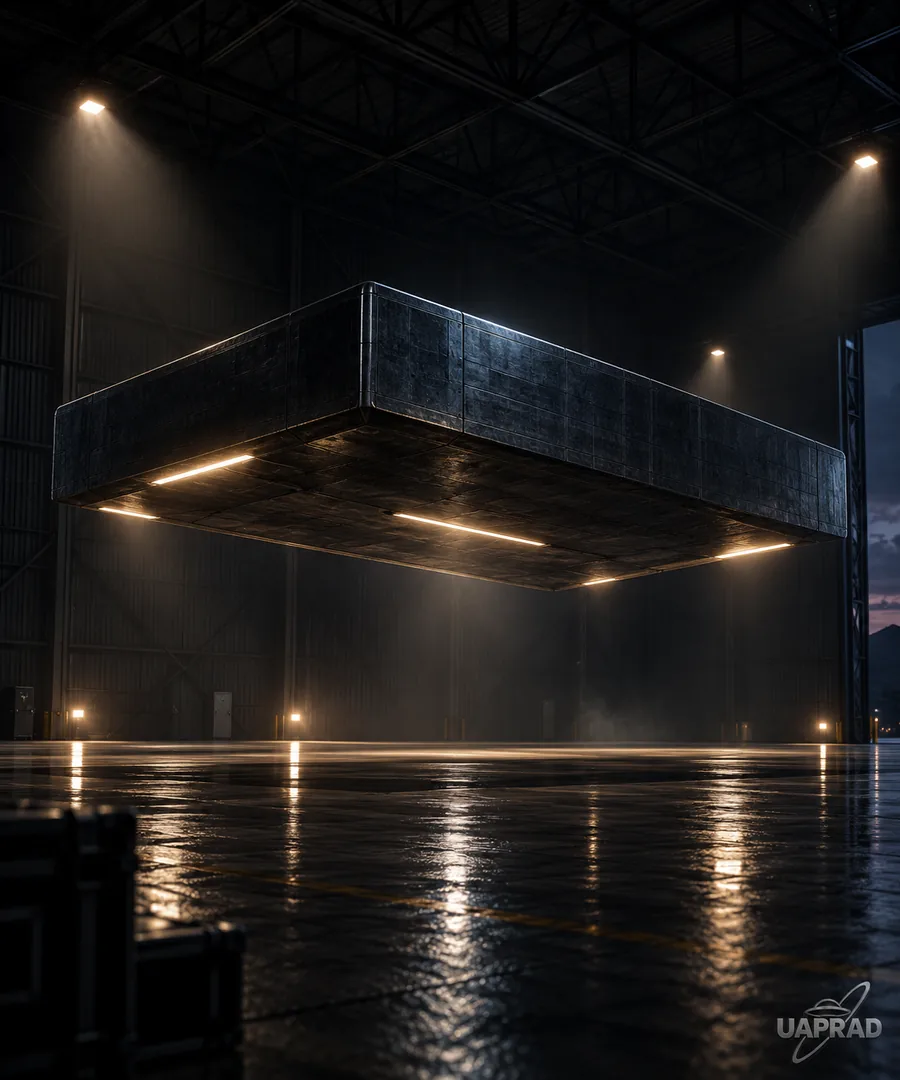 RectangularRectangular, oblong or block-like forms reported without a conventional aircraft profile.
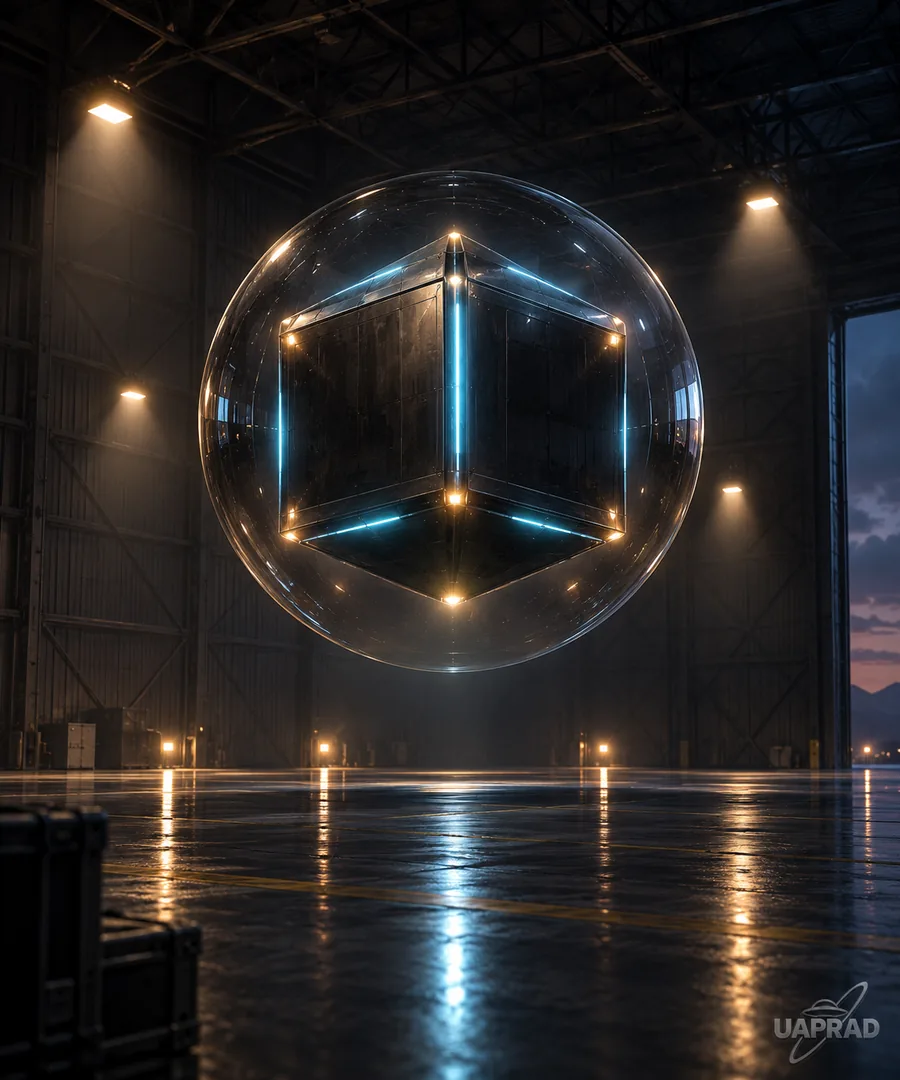 Cube within a sphereA compound form associated principally with modern United States naval aviator testimony.
 Ring / torusAnnular forms and luminous rings whose centre appears open or less bright.
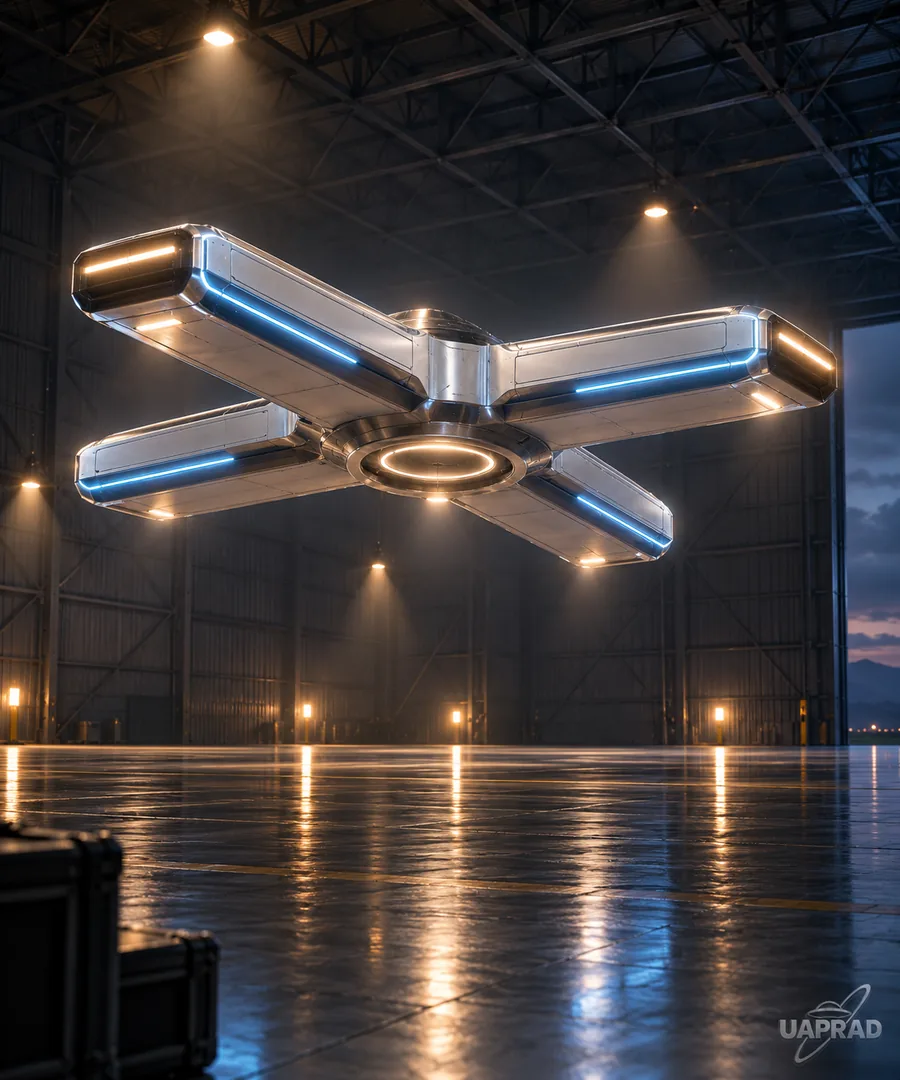 Cross / cruciformCross-shaped silhouettes or arrangements whose arms suggest a cruciform structure.
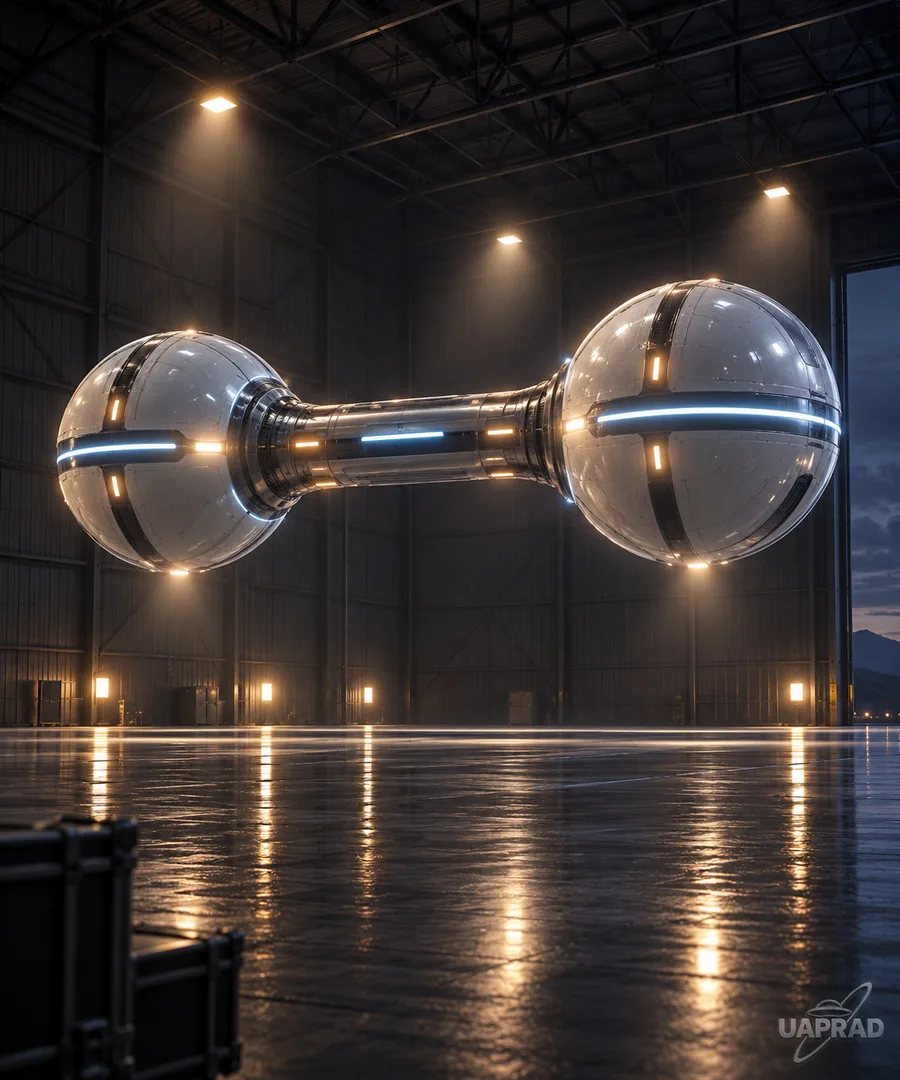 Dumbbell / compoundPaired or multi-lobed forms apparently joined into a single structure.
 Irregular / shape-changingAsymmetrical, changing or poorly resolved forms that resist a stable geometric description.